Climate change is disrupting the symbiotic relationship between plants and soil fungi
A thirty-year experiment in the US shows how rising temperatures are transforming ecosystems internally: the abundance of fungi that are useful to plants is declining, while decomposers are increasing. As a result, soil ecological stability is being disrupted
by Matteo Cavallito
It only takes a few decades of higher temperatures to alter the relationship between plants and microbial systems, thereby disrupting carbon and nutrient cycles. Fungi in particular are deeply affected, as their population composition changes, with significant consequences for the soil. This is according to a study published in the journal Proceedings of the National Academy of Sciences.
“Hidden mycorrhizal fungi below ground are much more vulnerable to warming winters than we expected before,” Stephanie Kivlin, a professor in the Department of Ecology and Evolutionary Biology at the University of Tennessee and co-author of the study, explained in a statement. “The timing of their growth is disrupted by warmer winters, and they can’t form the beneficial symbioses that currently occur. We now have evidence that the mycorrhizal fungi never recover from warmer winters and will decline in many temperate ecosystems.”
Climate impacts plant-microbe interactions
Assessing the consequences of climate change on soil remains complex. “Climate forecasts project rising temperatures for every land surface on Earth,” the researchers note. Moreover, they add, “shifts in plant–microbial interactions can lead to significant changes in ecosystem-level functioning.” To understand these effects, the authors examined changes occurring in a field at the Rocky Mountain Biological Laboratory in Gothic, Colorado, by simulating warming conditions.
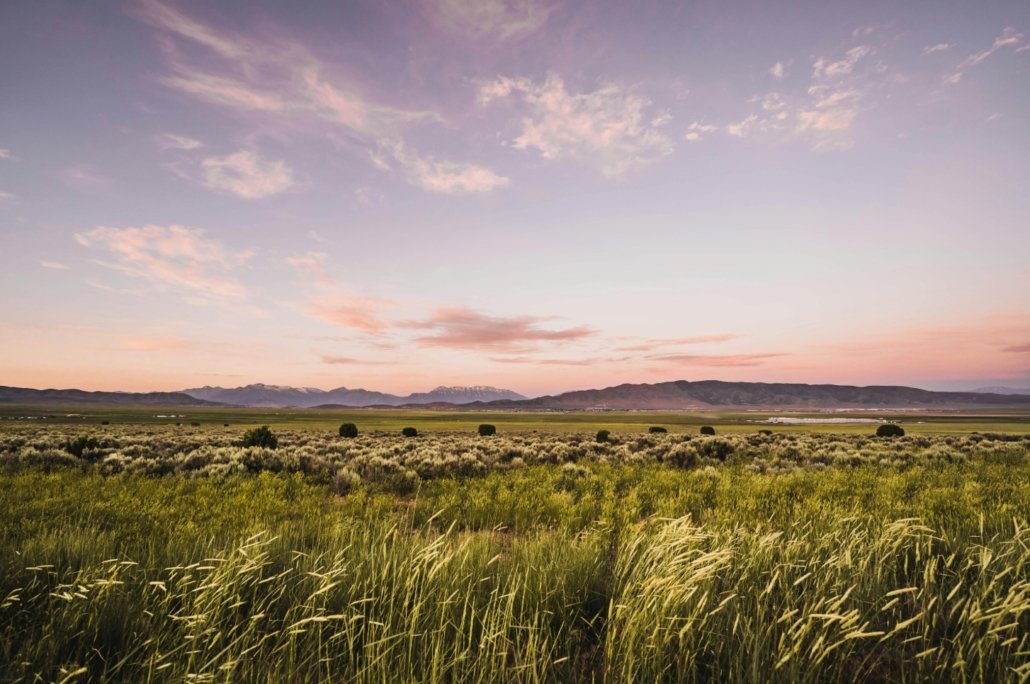
The result was a shift in the environment, which turned from alpine grassland into a drier shrubland.
“What is really exciting about these findings is that they demonstrate that not only do plant communities shift, which has been documented before, but the soils that are associated with these communities can also change,” explained Lara Souza, a professor at the University of Oklahoma’s School of Biological Sciences and lead author of the study. “The changes we’re seeing below ground are driven by the changes in the plants.” In this new equilibrium, in fact, mycorrhizal fungi decline, while decomposer fungi increase, deeply altering natural cycles.
Mycorrhizal fungi declined by 20%
Data show remarkable structural changes. “Warming caused a transition from herbaceous to woody-dominated vegetation, with shrubs increasing by 150% in warmed plots and a concurrent ~28% decrease in both forbs and grasses,” the study states. “This shift was accompanied by functional traits changing by 20% toward more conservative values relative to acquisitive ones.” In addition, interactions between vegetation and microorganisms decreased.
“Consequently, plant–symbiont associations decreased with root-associated fungi—arbuscular mycorrhizal fungal and septate root colonization—both declining by 17 to 20% under warming” the study says. “In turn, soil saprotrophic fungi increased by 10% with warming.”
Thanks to its long duration, the experiment conducted in Colorado is the first to demonstrate just how vulnerable the bonds between the components of ecological communities ultimately are to environmental changes. Mycorrhizal fungi, which are essential for plant health, are simply unable to adapt to climate change, with potentially long-lasting consequences for ecosystems.
The consequences of decoupling
What emerges, therefore, is a decoupling between the functions of plants and those provided by microorganisms. “Strikingly, warming decoupled above- and belowground communities and their functions,” the study explains. “This decoupling was evident as plant–available phosphorus increased and both individual plants and plant communities reduced their reliance on mycorrhizal fungi, while plant connectedness to decomposer fungi tightened.”
This phenomenon has deep implications: in addition to causing significant changes at the ecosystem level, warming also causes a shift in biological timing.
With the early melting of snow, fungi develop before plants, absorbing nutrients from the soil without subsequently being able to transfer them. These nutrients are thus lost through leaching before vegetation can utilize them. This results in limited plant growth, with significant effects on productivity, nutrient cycles, and ecosystem services.
 Steve Daniels Attribution-ShareAlike 2.0 Generic CC BY-SA 2.0 Deed
 Nathanieljoyce, Creative Commons Attribution-ShareAlike 4.0 (CC BY-SA 4.0)
 Hannes Grobe Attribution-ShareAlike 2.5 Generic CC BY-SA 2.5 Deed