Forest soil in Germany has offset carbon losses from trees during drought
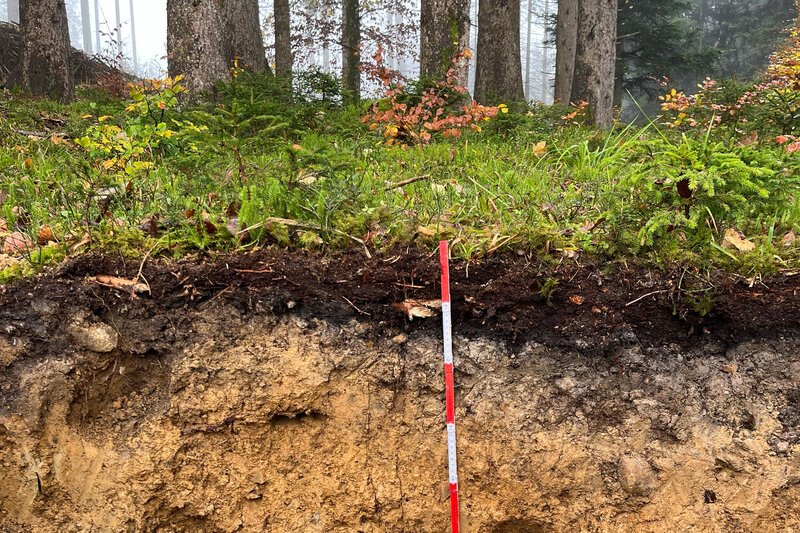 Thünen Institute/Marius Möller press release
 The discovery comes from the Thünen Institute: between 2018 and 2020, German forest soil stored more carbon than expected, almost entirely offsetting the losses associated with plant mortality
by Matteo Cavallito
Trees and soil both contribute to carbon capture and sequestration. However, certain circumstances can limit this function. Nothing new, off course, except for one surprising detail: the soil’s remarkable ability to compensate for the reduction in storage by plants following a critical event.
The discovery comes from researchers at the Thünen Institute of Forest Ecosystems in Braunschweig, Germany, who recently examined the impact of drought on the country’s forests between 2018 and 2020. In the end, they found that the soil was able to offset almost all of the losses of this element.
New estimates for years of drought
For years, Thünen researchers have been processing locally provided data to compile a report on the conditions and changes in forest land. The multi-year survey, called BZE , the third edition of which will be published in 2028, is based on information collected at 1,900 sampling points over a period of three years.
Recently, on the recommendation of an international team of experts on greenhouse gas reporting, the Institute recalculated the data on storage during years of water shortage, which, the researchers note, were characterized by significant tree mortality.
Following this event, plant debris—such as needles, leaves, and fine roots—accumulated on the ground, forming a litter layer that subsequently decomposed thanks to the action of microbes. In this way, carbon was exported to the soil, a fairly common phenomenon. What surprised the researchers, however, was the amount of carbon detected in the soil, which was higher than expected.
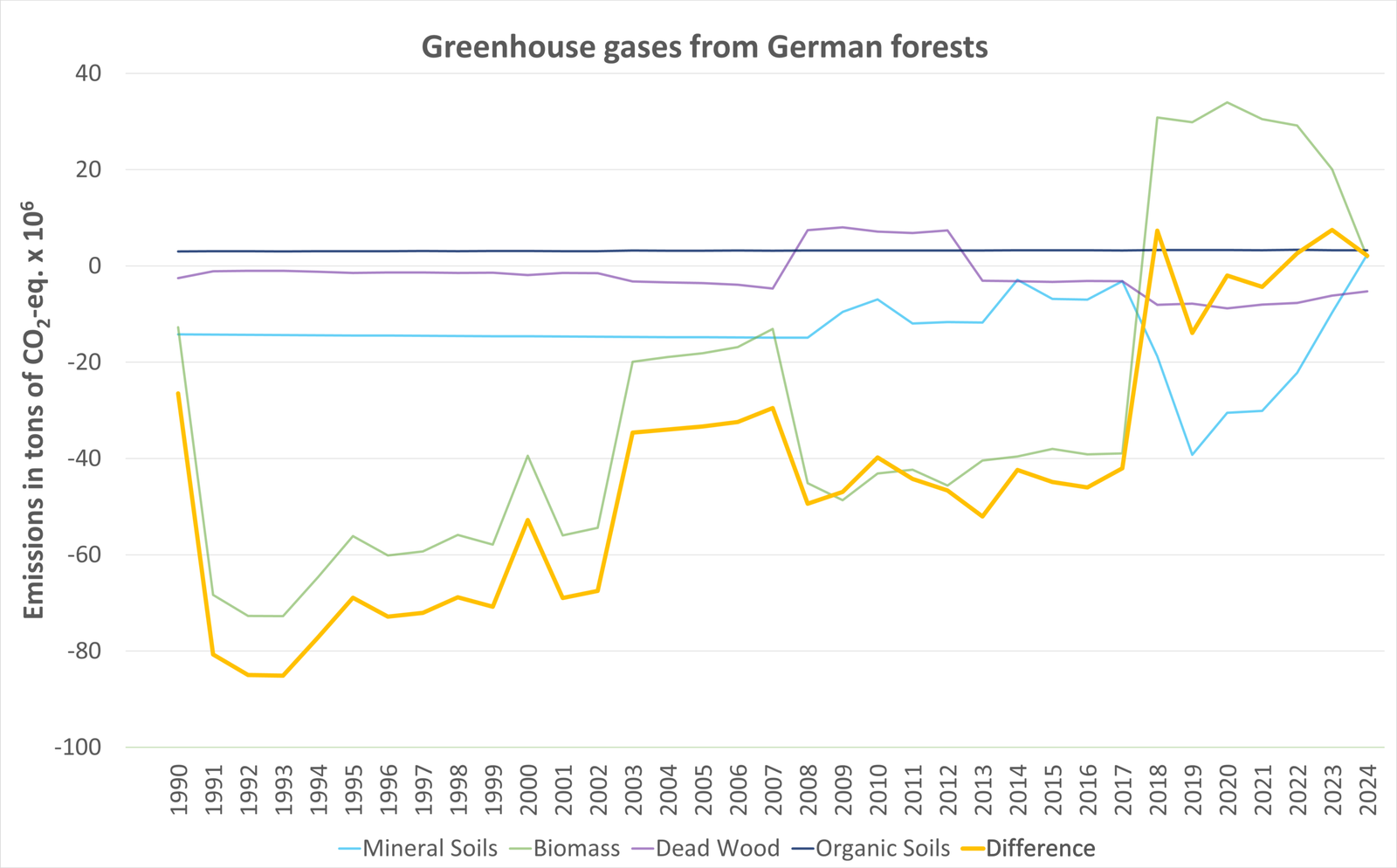
Between 2018 and 2020, German forest soil stored more carbon than expected, almost entirely offsetting the losses associated with tree mortality. Source: © Thünen-Institut press release
Trees and soil contribute almost equally to carbon sequestration
“During the dry years, Germany’s forests largely lost their function as carbon sinks,” explains the Institute. “Now it has become apparent that the forest soil compensated for almost all of the negative effects during this period, thus taking over the sink function of the trees.”
In total, the researchers argue, above-ground forest biomass in Germany stores a quantity of carbon not much greater than that contained in forest soils (in the top 30 centimeters) and litter: 1 billion 184 million tons versus 936 million. In total, this amounts to approximately 2.2 billion tons, including the 46 million tons measured in dead wood.
The climate factor
The authors observe that carbon sequestration in forests is influenced not only by soil characteristics but also by climate change. That is, by related events such as drought and rising temperatures. When temperatures are higher, in particular, the soil absorbs more carbon from organic material. However, the picture is definitely complex.
The researchers note that the absorption process “slows down again after just a few years. At the same time, new forests grow on the damaged areas, which in turn store more carbon in their biomass.” In short, the data show that the soil does not absorb carbon from dead biomass at a constant rate. This is something that will now have to be taken into account when defining updated prediction models on the state of forests.
 Mokkie/Wikimedia Commons – CC BY-SA 3.0
 Yuriy Kvach/Wikimedia Commons – CC BY-SA 4.0
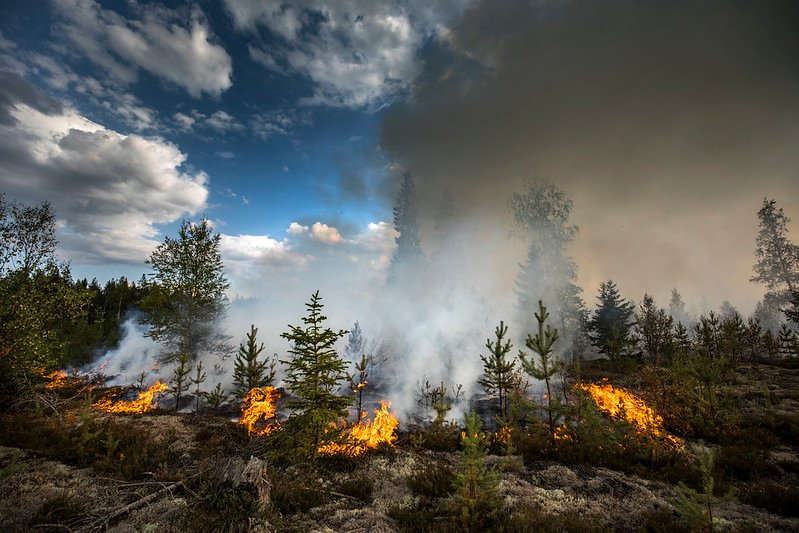 © European Union 2018 (photo by Pavel Koubek), CC BY-NC-ND 2.0