Denmark has mapped national soil microbiome
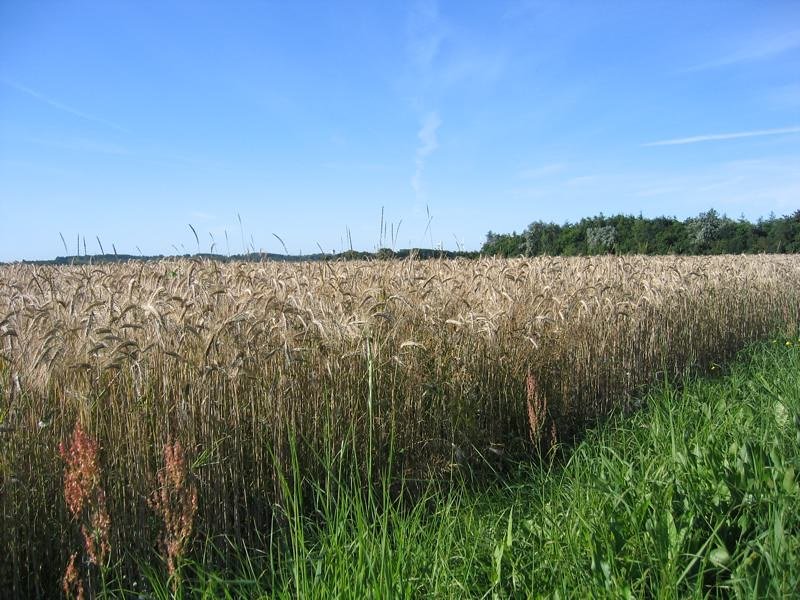 Jane Tierney Attribution 2.0 Generic CC BY 2.0 Deed
 The study, which involved the universities of Aalborg and Vienna, holds particular significance for a country with a strong agricultural tradition such as Denmark. The degree of habitat disturbance, the authors explained, affects microbial profiles
by Matteo Cavallito
The biodiversity of microorganisms in Denmark soil is now fully represented in a national atlas. This is the result of extensive research conducted by a group of scientists led by Aalborg University, with the contribution of the University of Vienna, and described in a study published in the journal Nature.
The study focused on over 10,000 soil samples collected across the country, which made it possible to map the different Danish environmental microbiomes “with unprecedented spatial resolution and functional depth,” the authors explain in a news release. The researchers also highlighted the key role of nitrifying microbes in the nitrogen cycle.
Intensive agriculture alters microbial profiles
Launched in 2019, the study called “Microflora Danica” is based on 10,683 gene sequences of microorganisms and additional rRNA datasets and links the sequences to different habitats. “Moreover,” the research states, “the dataset incorporates 14.9 million bacterial (median 4,528 bp) and 13.4 million eukaryotic rRNA operon sequences (median, 4,035 bp), as well as 6.4 million nearly full-length bacterial 16S rRNA gene sequences (median 1,355 bp).” These data, in particular, “originate from a subset of samples (450 and 412, respectively) reflecting sample diversity while maintaining geographical coverage of the wider dataset.”
The study, the authors note, highlighted above all how the degree of habitat disturbance associated with intensive agriculture affects microbial profiles.
Natural habitats, in fact, retain greater overall diversity. Disturbed habitats, on the other hand, show high diversity at the local level but are more homogeneous at the national level. “This underlines the role of natural systems in maintaining total species (gamma) diversity and emphasizes the need for national baselines for tracking microbial responses to land-use and climate change,” the study explains.
The importance of nitrifiers
In analyzing the phenomenon, researchers focused on so-called nitrifiers, a group of microbes that impact climate regulation and water quality, two aspects linked to nitrogen emissions into the atmosphere and its distribution in waterways through the phenomenon of soil leaching. “We identify several lineages encoding nitrifier key genes and reveal the effects of land disturbance on the abundance of well-studied, as well as uncharacterized, nitrifier groups, with potential implications for N2O emissions,” the scientists explain.
In practice, the nitrifiers in soil microbiomes determine how long the reactive nitrogen in fertilizers remains available to plants. And when, on the other hand, it accumulates and spreads, damaging the environment.
The study showed for the first time the national distribution of these microorganisms and revealed how different nitrifiers produce varying amounts of nitrates and react differently to nitrification inhibitors, which are often added to fertilizers to limit losses. “Understanding which nitrifiers are present and how abundant they are opens up major future potential for making agriculture more precise, efficient, and sustainable,” the researchers emphasize.
The future of agriculture in Denmark
The study is particularly significant for a country with a strong agricultural tradition such as Denmark, which devotes around two-thirds of its land to cultivation, the scientists point out. In particular, the research results show that microorganisms are the main drivers of biogeochemical processes and are therefore sensitive to land use. This highlights the need to deepen our knowledge in order to develop more sustainable agricultural strategies.
“The next step is linking microbial species and guilds, such as nitrifiers, to other national research efforts, including historical land use, fertilization regimes and greenhouse gas emissions,” the authors conclude. “Through the identification and characterization of new species, microbially informed agricultural management is within reach, offering a potential strategy to limit N2O emissions by tailoring inputs to encourage or discourage specific microorganisms.”
 Eric Guinther, CC BY-SA 3.0
 Warren LeMay CC BY-SA 2.0
 Tom Jarrett, Attribution-NonCommercial-ShareAlike 2.0 Generic (CC BY-NC-SA 2.0) Deed