Here’s how Arctic soil offsets emissions from alpine permafrost
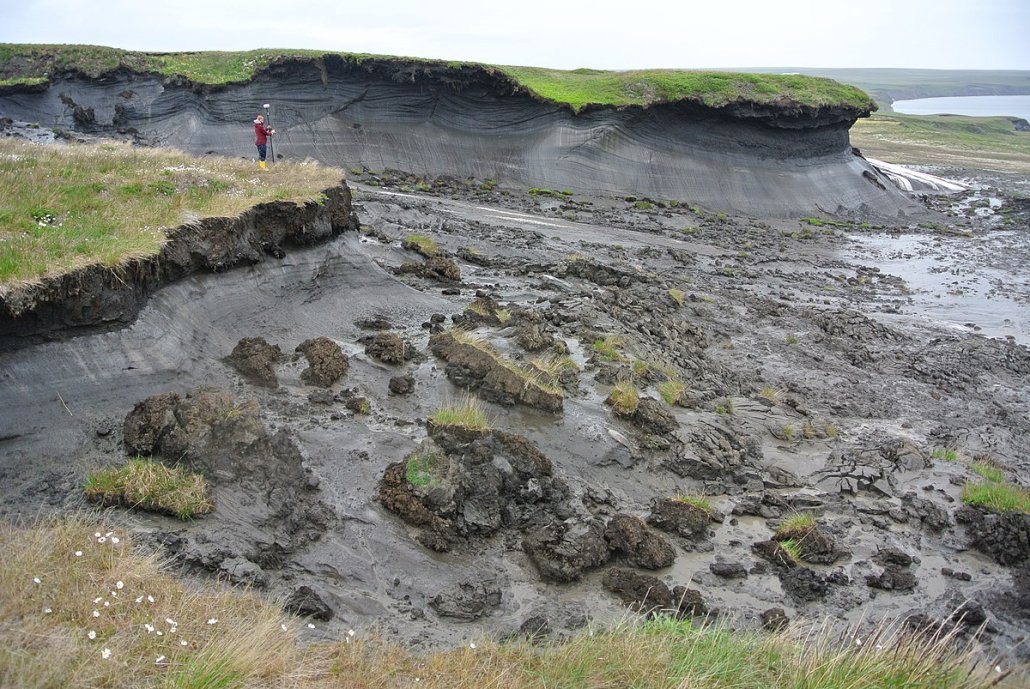 Boris Radosavljevic Attribution 2.0 Generic CC BY 2.0 Deed
 Climate change reduces the absorption of greenhouse gases by alpine permafrost but, at the same time, it stimulates CO2 and methane sequestration in Arctic frozen soil, a Chinese study has found. In the first case, global warming potential increases by 13%. In the second, it decreases by 10%
by Matteo Cavallito
Global warming alters the carbon absorption capacity of the various regions of the planet that are home to permafrost, the soil that remains frozen permanently or for long periods (at least two years). Rising temperatures, in particular, increase the capacity to capture the element in Arctic ecosystems. However, at the same time, they reduce this capacity in alpine areas. This is claimed in a study published in the journal Science Advances and conducted by researchers from the Institute of Atmospheric Physics of the Chinese Academy of Sciences.
Will permafrost cross the point of no return?
Permafrost, the authors explain, covers about 17% of the Earth’s surface and stores one-third of the organic carbon present in the world’s soil. “With climate warming, the resulting permafrost thaw increases microbial soil organic carbon decomposition and therefore greenhouse gas emissions, potentially triggering further increases in global air temperatures,” the study points out. “However, the net exchange of GHGs, in particular carbon dioxide (CO2), depends on the response of vegetation to the warming and consequent changes of soil nutrient availability.”
Some estimates are alarming. In 2023, a study published in the journal Proceedings of the National Academy of Sciences compared the current climate scenario with that of millions of years ago, hypothesizing the disappearance of most surface permafrost by the end of this century.
The fear, therefore, is that this particular environment could cross the point of no return, triggering, as the authors explain, an “irreversible positive feedback loop that accelerates warming.” To help provide an answer, the research aims to clarify the dynamics involved in permafrost by analyzing the net response of greenhouse gases, taking into account the “strong spatial heterogeneity of these landscapes.”
The Arctic sink compensates for a large part of alpine emissions
Scientists integrated data from 1,090 monitoring sites with information collected in the permafrost regions of the northern hemisphere. Here, researchers measured the response to experimental soil warming of three different compounds: carbon dioxide (CO2), methane (CH4) and nitrous oxide (N2O). “Warming weakened the GHG sink of alpine permafrost, thereby increasing (13%) its global warming potential, but strengthened the GHG sink of Arctic permafrost and decreased (−10%) its global warming potential,” the authors explain.
In particular, they add, “When warming caused drying of alpine permafrost soils, the CO2 sink weakened but the CH4 sink increased. In contrast, warming of relatively wet Arctic permafrost increased the CO2 sink and CH4 source.”
Finally, the increase in temperature has led to an increase in nitrous oxide emissions in both alpine and arctic regions. The numbers are low, but caution is still needed. “Given that N2O has a global warming potential approximately 273 times that of CO2 over a century, even small increases can have a disproportionately large impact on the climate,” the researchers point out.
A delicate balance
According to the research, this balance is determined by a number of important regional differences, starting with the presence of water and its variation. In alpine permafrost—which is found at higher altitudes and lower latitudes—the water content in the soil is reduced. This significantly weakens carbon absorption through photosynthesis, accelerating carbon emissions. In Arctic regions, on the other hand, wetter soils and denser vegetation support greater CO2 absorption.
Here, warming increases the water content in the subsoil, further stimulating carbon dioxide absorption and partially offsetting emissions from the decomposition of the element in the soil. But it also increases the release of methane from water-saturated soils.
In the future, therefore, the balance between declining Alpine absorption and enhanced Arctic sequestration will depend on interactions between surface hydrology and ice melt. “The weakened carbon uptake capacity of alpine permafrost ecosystems under warming emphasizes the importance of monitoring and predicting changes in permafrost hydrological processes for better understanding the fate of massive permafrost carbon stock under future warming,” the researchers conclude.
 Photo: Thomas Bjørkan CC BY-SA 3.0
 Re Soil Foundation