“The new Bioeconomy Strategy is a step forward for the EU’s economic future”
David Newman (European Bioeconomy Bureau): “The document acknowledges past mistakes and seeks to correct them, also to avoid missing the train of opportunities that bioeconomy offers”. But some aspects are worrying, starting with the lack of market-pull mechanisms to stimulate industrial innovation
by Emanuele Isonio
“The Commission deserves congratulations for publishing such a comprehensive and comprehensive document in such a short time. It is a forward-looking document, with fairly clear objectives, which recognizes the important—I would even say central—role of the bioeconomy in the future of the continent’s economic fabric”. David Newman is president of the European Bioeconomy Bureau, a Brussels-based NGO that promotes the bioeconomy as a sustainable alternative to the fossil-fuel economy. He is undoubtedly pleased to learn of the European Commission’s presentation of the new Bioeconomy Strategy, which replaces the document developed in 2012 and the reviews conducted in 2018 and 2022.
Dr. Newman, why are you so pleased with the new Bioeconomy Strategy?
First of all, because it makes statements we’ve been waiting for for many years. For example, it acknowledges that incentivizing the use of biomass solely for energy production was a mistake that must be corrected. It also recognizes the important role of bioplastics and calls for a review of the PPWR. These are aspects we applaud, because they come after years of discussion during which, as supporters of the bioeconomy, we were always ignored.
Are there any weaknesses that worry you?
Let me give you an example: currently, bioplastics account for 1% of the European plastics market. Consequently, it’s not worth collecting, separating, and recycling them, except in Italy, where a system has been developed around biomass recycling through composting and biogas. In the rest of Europe, to make separate collection and recycling economically viable, bioplastics will have to penetrate the market to reach about 5% of plastics. However, since they are small-scale produced materials, the price of raw materials is often 4 or 5 times that of fossil-based plastics, which are then heavily incentivized through subsidies. What mechanisms can we create to stimulate the bioplastics market, increase production, reduce costs, and create collection and recycling networks?
In my opinion, we need precise guidelines, obligations, and binding targets that determine the use of biopolymers in certain applications. Just as Italy has done with grocery bags, produce bags, and organic waste collection bags. Then the price becomes irrelevant. If there is a requirement, production is stimulated and investment follows.
The new Strategy does not provide for these “market pull” mechanisms (which leverage market demand to stimulate product development, ed.). This is certainly a major weakness.
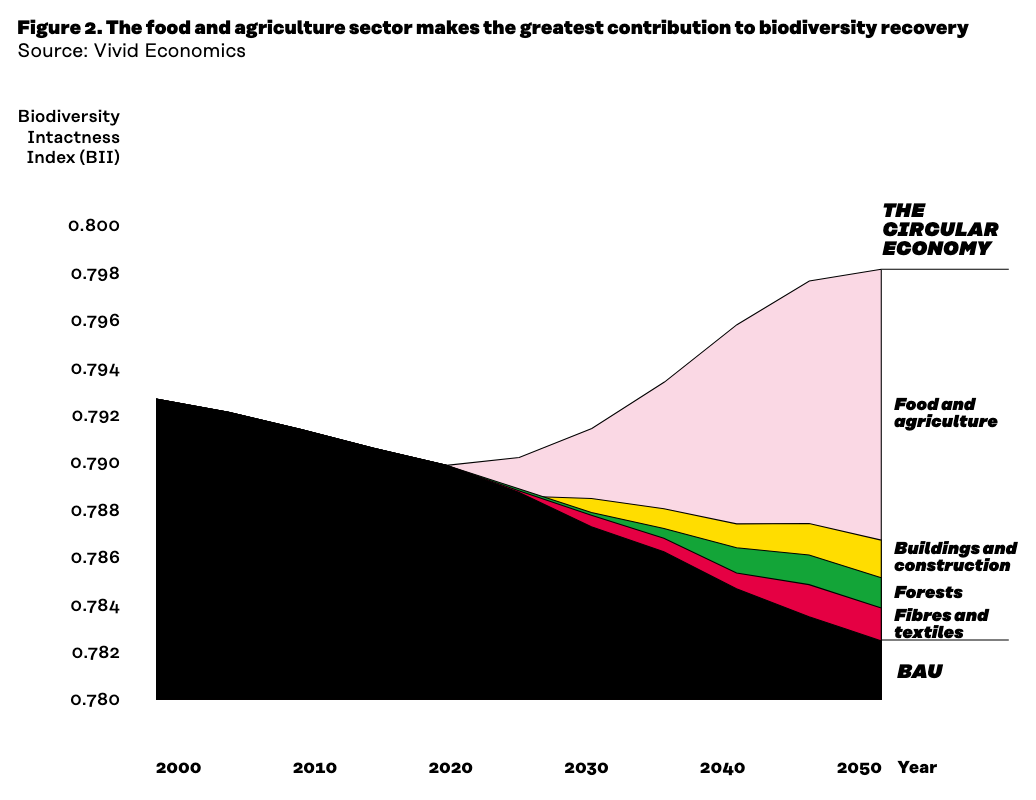
The contribution of the circular bioeconomy to biodiversity recovery. SOURCE: Tackling root causes – Halting biodiversity loss through the circular economy
Why was a new Bioeconomy Strategy needed given that others have been presented in the past?
There is a requirement to review strategies periodically, but above all, the speed of economic and technological change is such that new legislative tools are needed to incorporate these innovations into the European economy. The Commission itself admits that China and the United States are ahead of us, and we therefore risk losing the potential for economic growth that the bioeconomy offers. Investments are going elsewhere. Resolving this situation becomes urgent and inevitable.
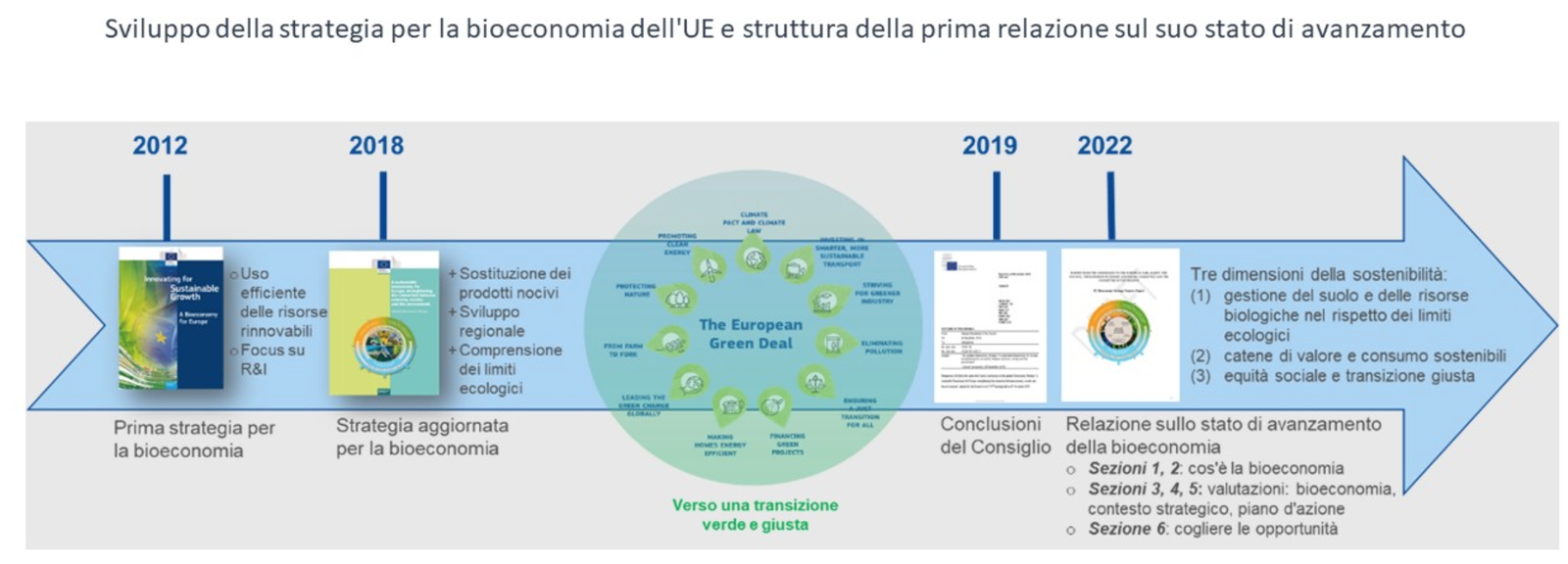
SOURCE: European Commission
Concretely, how will the new Strategy help Europe’s industrial fabric?
Good question. To answer, I can only rely on what the Commission is committed to doing according to the new Strategy: Several concrete actions stand out. The Commission will support the scale-up of biorefineries and bio-based materials, strengthen investment through dedicated platforms and EU partnerships, and accelerate innovation in biotechnology and biomanufacturing. A new Strategic Deployment Agenda will help regions build their own bioeconomy pathways, supported by living labs, pilot actions, and tailored policy assistance.
Equally important is the renewed focus on sustainability. The strategy reinforces EU monitoring systems, promotes clearer standards and labels for bio-based products, and provides guidance to ensure that biomass production protects nature, soils, and biodiversity.
Why does European industry’s global competitiveness depend on investments in the bioeconomy?
Europe cannot compete against the production of fossil-based materials. China, the Middle Eastern countries, and the United States have much lower raw material and energy costs. Furthermore, the high costs associated with social programs, labor costs, and labor productivity make the EU less competitive. We must avoid the gradual deindustrialization that the chemical, automotive, and many other sectors are already experiencing. Investing in new technologies where raw material costs are roughly equal and where there are no consolidated and dominant industries elsewhere allows Europe to compete. But we need to move quickly. My fear is that European processes are too slow. We talk a lot, but here we need incisive and strong legislative tools to make up for lost time and regain a foothold in global markets. Will we succeed?
Will the new EU Strategy now also influence national regulations, and in what way?
The revision of certain regulations, such as the PPWR or Waste Framework Directive, directly impacts national legislation. And this is partly the problem: as we see from the huge number of infringement procedures initiated against Member States, the implementation of European regulations is slow and incomplete. A greater effort to implement EU rules would undoubtedly be welcome.
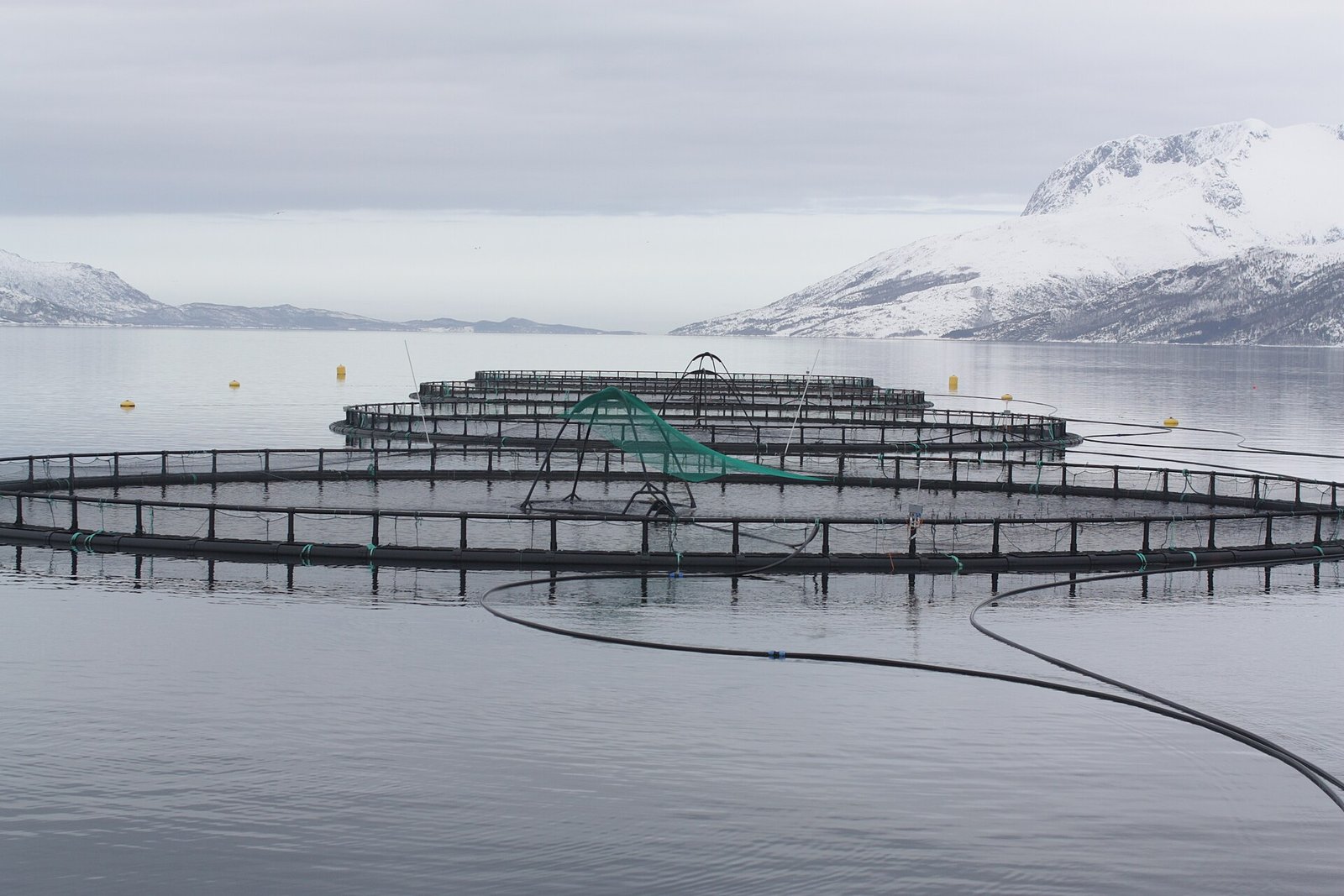 Photo: Thomas Bjørkan CC BY-SA 3.0
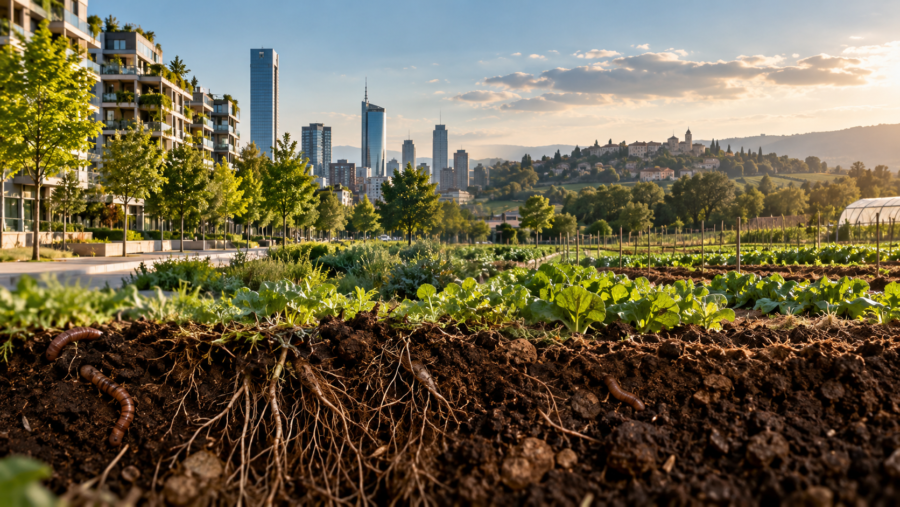 Re Soil Foundation