
The Soil Monitoring Law is here. Final approval at EU Parliament
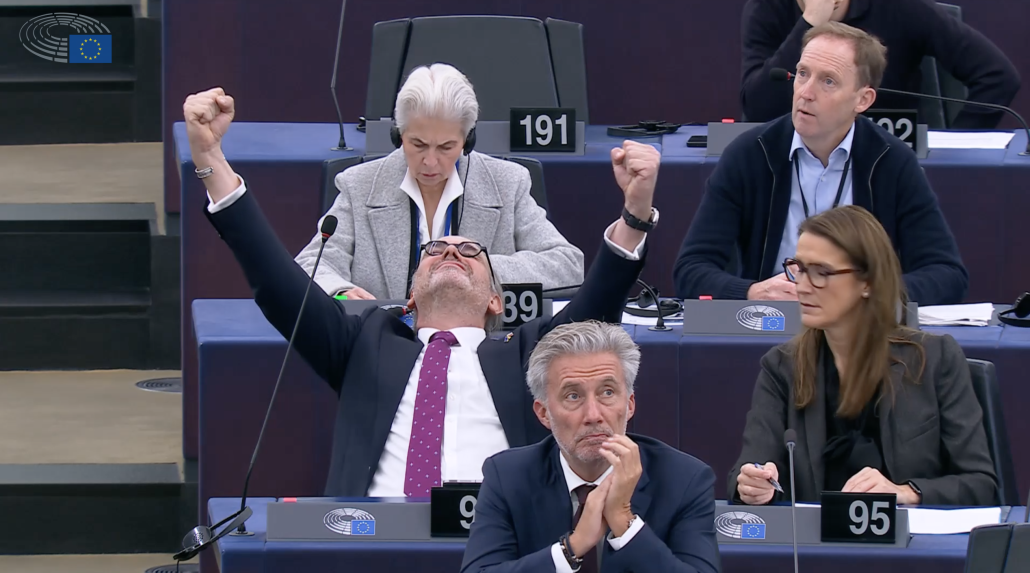
After a two-year legislative process, the Soil Monitoring Law has been definitively approved by the European Parliament. Rapporteur Martin Hojsík said: “The directive is a help for farmers and foresters. It ensures healthy soil and bread on our tables.” Member states now have three years to implement the rules at the national level
by Emanuele Isonio
It was 2006 when a proposal was first made to equip the European Union with a directive to protect continental soils. That year, the then-Commission led by Manuel Barroso proposed an “EU Thematic Strategy for Soil Protection”. The text came to nothing and was officially withdrawn in 2014, scuttled by strong opposition from Germany, which managed to polarize a blocking minority composed of several other Central and Northern European states.
Twenty years later, the outcome is different. After a legislative process lasting more than two and a half years, spent engaging with other EU institutions and refining the sections of the text that might have encountered the most obstacles, the European Parliament today gave its final approval to the Soil Monitoring Law. 341 MEPs out of 571 voted in favor of its adoption, rejecting proposals to block it presented by its opponents.

The result of the European Parliament’s final vote on the Soil Monitoring Directive. To pass it, the opposing amendments presented by the legislation’s opponents had to be rejected. SOURCE: European Parliament.
Understanding soil health to better protect it
Opposition to the directive has been led by German MEPs in particular, with further rejection amendments tabled by the right-wing Patriots and Europe of Sovereign Nations groups. The official reason: Member states would be better placed than the EU to legislate on their own soils, and in any case, the new rules are excessively bureaucratic.
These accusations have been made repeatedly during these months of debate. But they have been flatly rejected by the rapporteur for the Soil Monitoring Law and Vice President of the European Parliament, Slovakian Martin Hojsík (Renew Europe): “We made sure that there are no, and I repeat no, obligations on farmers and foresters in the new law. We made sure that there is no, and I repeat no, paperwork and bureaucracy for farmers and foresters. What we delivered is a mandate that the Member States should help farmers and foresters in protecting their soil. That the Member States get better knowledge about the problems facing the soil. That there is a platform for collaboration“.
The speech by European Parliament Vice-President Martin Hojsík
The main elements of the directive
The rapporteur for the directive was keen to emphasize that the text approved today, the result of an agreement with the EU Council of Ministers, “reverses the Commission’s original proposal, which went in the wrong direction.” The goal: to have a bottom-up regulation, using subsidiarity as a basis to ensure a level playing field across the EU. This concept was already made explicit in recent months by the EU Committee of the Regions</strong>, which in its opinion expressed the need to “ensure active participation by local and regional authorities in initiatives to improve soil health, taking into account the widely varying conditions in terms of ecosystems, composition, concentrations of natural background, differences in land use, population density, and climatic conditions”.
The directive includes several key measures to be adopted at the national level:
- Establish a comprehensive and harmonized, yet flexible, framework for monitoring soil health, with criteria for healthy soils;
- Provide support to soil managers to improve soil health and resilience;
- Mitigate the impacts of land use, such as buildings and infrastructure, on the soil’s ability to provide other ecosystem services without impeding the authorization of such activities;
- Identify potentially contaminated sites and manage them to eliminate risks to human health and the environment, in compliance with the “polluter pays” principle.
“This seems like a huge step forward,” commented Luca Montanarella, a long-time member of the EU Commission’s Joint Research Center, winner of the FAO Glinka World Soil Prize, and current member of the Re Soil Foundation’s Technical Scientific Committee, just minutes after the final approval. “For the first time, we have European soil legislation. This means recognizing the transnational dimension of protecting this important resource. It also means recognizing that soils have very different properties across the European Union, but a common approach is still possible, interpreting the Union’s motto literally: Unity in Diversity.”
Mandatory monitoring systems
Under the Directive, Member States will establish monitoring systems to assess the physical, chemical, and biological condition of their soils, based on a common EU methodology. They will report regularly to the Commission and the European Environment Agency, ensuring the availability of comparable data across the EU and the possibility of taking coordinated action to combat soil degradation. Measures will also be adopted to monitor emerging contaminants such as PFAS, pesticides, and microplastics.
The Directive defines common soil descriptors and introduces classes to describe soil health, linked to non-binding EU-wide target values and national guide values. This will help Member States identify priorities and gradually implement measures to improve soil health. The Commission will assist Member States by developing common tools and methodologies and facilitating the exchange of best practices.
Recognition for the Italian Approach
The soil monitoring approach envisaged by the directive is an indirect recognition of the Italian system, developed in particular by ISPRA and the National System for Environmental Protection. “The directive is a very important recognition for us because it effectively replicates the Italian monitoring system at the European level,” confirms Michele Munafò, head of the National Environmental Information System at ISPRA. “In this sense, Italy has an advantage over other countries. For years, it has developed land analysis tools that are now setting an example for the entire Union. Our country will therefore be able to leverage a wide range of data to plan and evaluate the most effective soil protection actions that may be included in the national implementation legislation.”
SOURCE: European Commission
A long road ahead
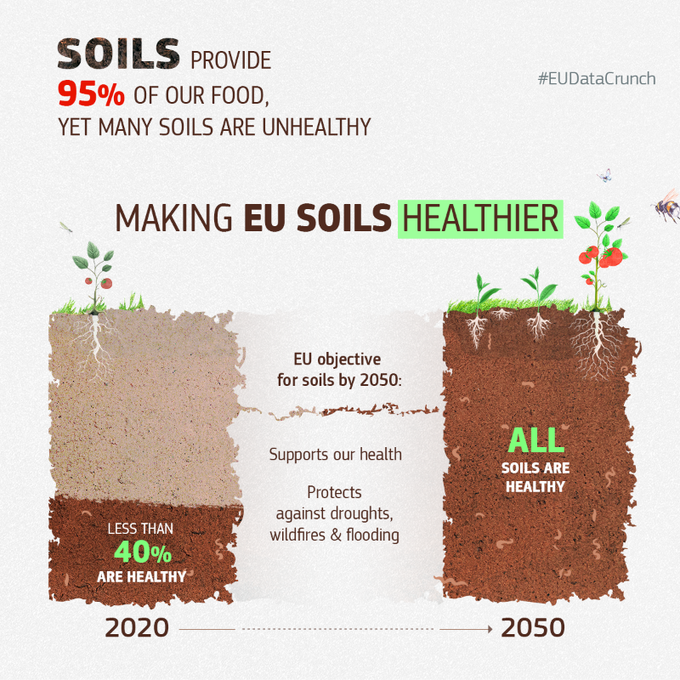
EU Member States will have three years, starting from the directive’s entry into force, to transpose the new soil health standards into their national legislation. The overall goal is to have all EU soils in good condition by 2050.
The path to achieving this goal is certainly neither short nor easy. The initial picture of continental soils is indeed worrying. The EUSO Soil Health Dashboard, a monitoring system developed by the European Soil Observatory, highlights that “61% of EU soils are in an unhealthy state, a disconcerting figure.” But beware: “This figure is an underestimate of the true extent of degradation, given the lack of data on many other issues related to the phenomenon, starting with contamination”.
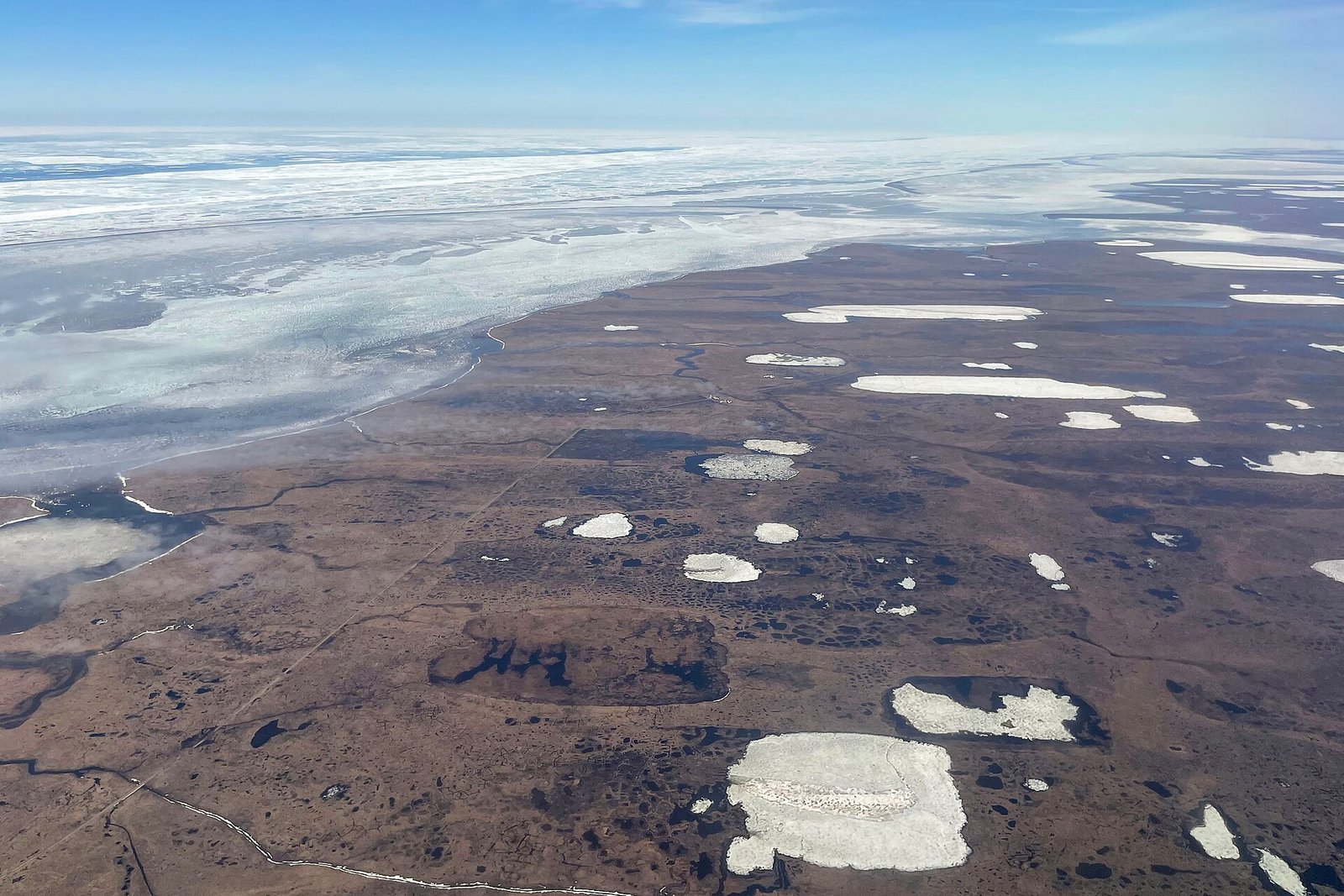
According to EUSO, most diseased soils are simultaneously subject to multiple forms of degradation. Among the most widespread are the reduction of organic carbon (53%), the loss of biodiversity (37%) and the risk of deterioration of peatlands (30%).

 Quintin Soloviev, CC BY 4.0


