Rock dust helps capture CO2 but not in acidic soils
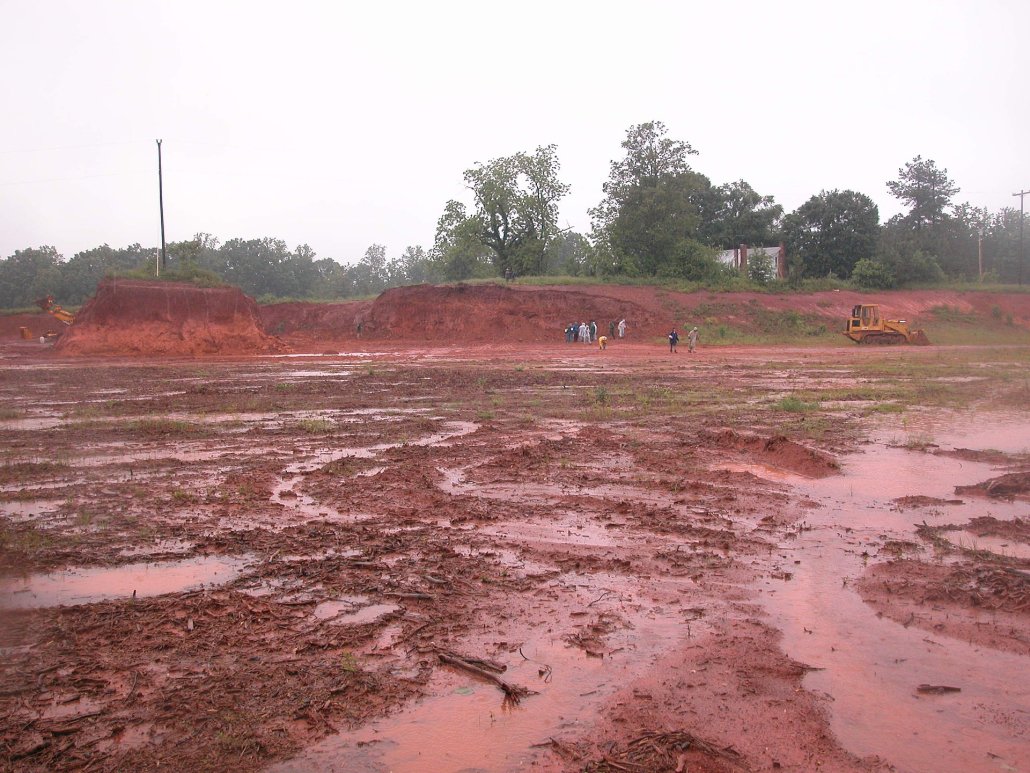 David Lindbo of the Department of Soil Science at NC State University Attribution 2.0 Generic CC BY 2.0 Deed
The dispersion of rock dust in the soil is generally an effective way of storing carbon. But in acidic soils, according to an Australian study, this mechanism does not work
by Matteo Cavallito
Rock dust boosts the soil’s ability to capture CO2, but the effectiveness of the operation is linked to some peculiar characteristics of the soil, starting with its acidity. This is highlighted by an experimental study carried out in Australia and published in the journal Science of The Total Environment.
“Modelling studies suggest billions of tonnes of CO₂ might be removed annually if crushed rocks were applied to croplands globally,” writes Paul Nelson, professor at James Cook University in Cairns, Queensland State, and co-author of the study on the Australian network portal The Conversation. “But before everyone gets too carried away, it’s crucial to be able to measure how much CO₂ is captured. Both industry and governments will need accurate measurements for effective policy, regulation and reporting”.
The weathering phenomenon
The principle behind the study is known as weathering and occurs when rain, which falls and captures carbon dioxide from the air, reacts with volcanic rock and locks in the carbon. The mechanism usually takes millions of years and is therefore too slow to compensate for global warming. The crushing of rock, however, can speed up the process considerably.
Rocks rich in calcium or magnesium, such as basalt, can be pulverised and spread on the ground to capture carbon dioxide, Nelson explains. This system is calledenhanced weathering.
Once on the ground, the CO₂ dissolves to form carbonic acid, which, in contact with the rock, converts the carbon dioxide into bicarbonate. The latter can be further converted and stored as limestone, or precipitate in groundwater and then in rivers to the sea where it is stored long-term. Finally, the addition of crushed rock improves soil health and fertility by providing important nutrients such as magnesium, calcium and phosphorous.
CO2 capture ranges from 20 to 10 thousand kilos per hectare
The diffusion of rock dust into the soil is therefore an effective way of storing carbon. The problem, the researchers note, is that this effectiveness seems to vary enormously. In the Midwest USA, for example, potential CO₂ removal rates of up to 2.6 tonnes per hectare per year over a four-year period have been estimated. Elsewhere, however, the system seems to work much less well.
In general, the authors note, the results of laboratory tests and field experiments vary widely, to the point that removal estimates vary between 0.02 and over 10 tonnes of CO₂ per hectare.
In some environments, such as peat bogs for example, the application of rock dust is even counterproductive. The variability of the data, Nelson continues, could be due to the nature of the crushed rock and the application system, but also to climate, soil type, type of cultivation and the duration of the trial. In addition, of course, to the measuring method used. The Australian study, for its part, may have identified another decisive aspect: soil acidity.
Weathering does not work in acidic soils
“This study aimed to directly measure in-field carbon dioxide removal via enhanced weathering of basalt applied to sugarcane on acidic (pH 5.8, 0–0.25 m) Ultisol (known as red clay soil, ed.) in tropical northeastern Australia, where weathering potential is high,” the research states. In the study area, crushed basalt as a by-product of gravel production was applied annually from 2018 to 2022. Subsequently, the effects of basalt erosion on soil flow and drainage chemistry were quantified.
In the soil, the presence of stronger acids contributed more to rock erosion than did carbonic acid. The erosion phenomenon, consequently, also took place but without leading to CO2 sequestration.
“These field trial results indicate that in strongly acidic soils enhanced weathering will be ineffective for carbon dioxide removal,” the research concludes. “Results of this field study will be useful for guiding that research and designing, parameterising, calibrating and validating process-based enhanced weathering models.”
 © European Union 2018 (photo by Pavel Koubek), CC BY-NC-ND 2.0
 Penn State. Attribution-NonCommercial-NoDerivatives 4.0 International, CC BY-NC-ND 4.0 Deed.
 Eric Guinther, CC BY-SA 3.0