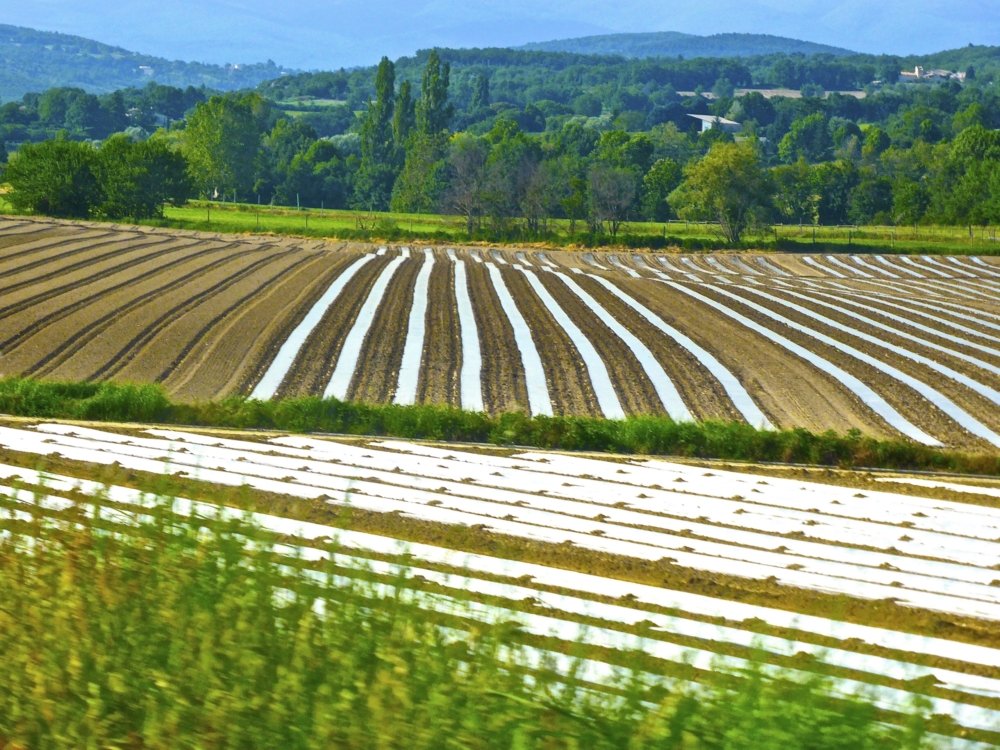
Trees around cultivated fields increase crop yields
 In fields surrounded by trees, the presence of hoverflies is more than 30 times hPhoto: Jean and Fred Hort Attribution 2.0 Generic CC BY 2.0 Deed
According to a Canadian study, the presence of trees increases the number of insects that contribute to pollination and the fight against crop pathogens
by Matteo Cavallito
The installation of tree barriers around agricultural fields encourages the presence of pollinating insects that benefit crops. This was confirmed by a recent study by theUniversity of Alberta in Canada, which quantified the number of hoverflies – a family of pollinating insects – in some rapeseed fields. ‘Hoverflies provide dual ecosystem services, as the adults act as pollinators and the larvae can be predators of crop pests,’ the study says. Therefore, the researchers report in a statement, it is important to gain more knowledge on how to make the most of the services that the insects themselves can provide to crops.
Hoverflies are a surprising resource
Although less well-known than other more common pollinators, hoverflies are actually a particularly valuable resource. ‘Bees can pollinate but they don’t have a role in pest control,’ explains Rachel Pizante, researcher and lead author of the study. Other insects, such as some beetles, have larvae that can fight pathogens, but many of them are unable to pollinate. In contrast, ‘overflies are a major group of common insects that can provide both services’.
It is therefore particularly important to understand what factors can influence their presence and, with it, the positive effects on crops.
‘Because bloom time is limited in mass-flowering crops, resources within crops for hoverfly adults can also be limited and change temporally,’ the study explains. ‘Therefore, hoverflies need to move between crops and their borders. It may be that some field border vegetation types support the provision of hoverflies to crops better than other vegetation types’ Working in 10 oilseed rape fields located in central Alberta, each with at least one tree and one grass border, the authors then measured the movement of the insects between the fields and their borders.

Bees and pollinating insects in general play a crucial role in our food security and ecosystems. Here are five of the ‘services’ provided. SOURCE: FAO Archives.
With trees, the presence of hoverflies increases 33-fold
The study was based on the use of traps in herbaceous and tree borders that allowed continuous sampling during the period May-August. The researchers then took into account not only the type of field perimeter but also several variables such as its structure and composition (edge width, canopy cover, grass height, herbaceous cover, vegetation cover, flower availability and the density of trees, shrubs, logs and felled woody debris) and assessed how these factors influenced the movement of hoverflies in and out of crops.
‘We found that field border type affected hoverfly movement such that, across the whole summer, net-export of hoverflies into crops was over 33-times higher from treed field borders (an estimated 84,699 hoverflies per km per week) than from herbaceous field borders (an estimated 2515 hoverflies per km per week)’
‘We did not find any single component of the vegetation within treed field borders that explained the difference in movement. We found more hoverfly activity in herbaceous field borders than in treed field borders during and after canola bloom, but that overall activity was equal between field border types prior to canola bloom.’
A support for biodiversity
In other words, the authors note, the effectiveness of trees does not vary depending on their characteristics. The solution, therefore, is particularly easy. ‘Any treed border should be capable of supplying enough hoverflies to potentially increase crop yields; there’s not a lot of tweaking needed. For example, the borders wouldn’t need to be planted in certain ways,’ she explains. ‘It also means that if a landowner wanted to plant a treed border for other purposes like mitigating soil erosion, it would benefit the hoverflies, too.’
The study then highlights another key aspect: the presence of trees would not only increase the number but also the biodiversity of pollinators. The researchers, in fact, identified 96 species of the insect and found that tree-lined borders supported twice as much hoverfly diversity as grassy perimeters, probably due to the greater resources available to fly larvae in these areas. These additional benefits, they explained, include the pollination of wildflowers and the decomposition of dead wood into soil nutrients.
 Photo: Thomas Bjørkan CC BY-SA 3.0
 Re Soil Foundation