Climate change threatens mountain plant biodiversity in Africa
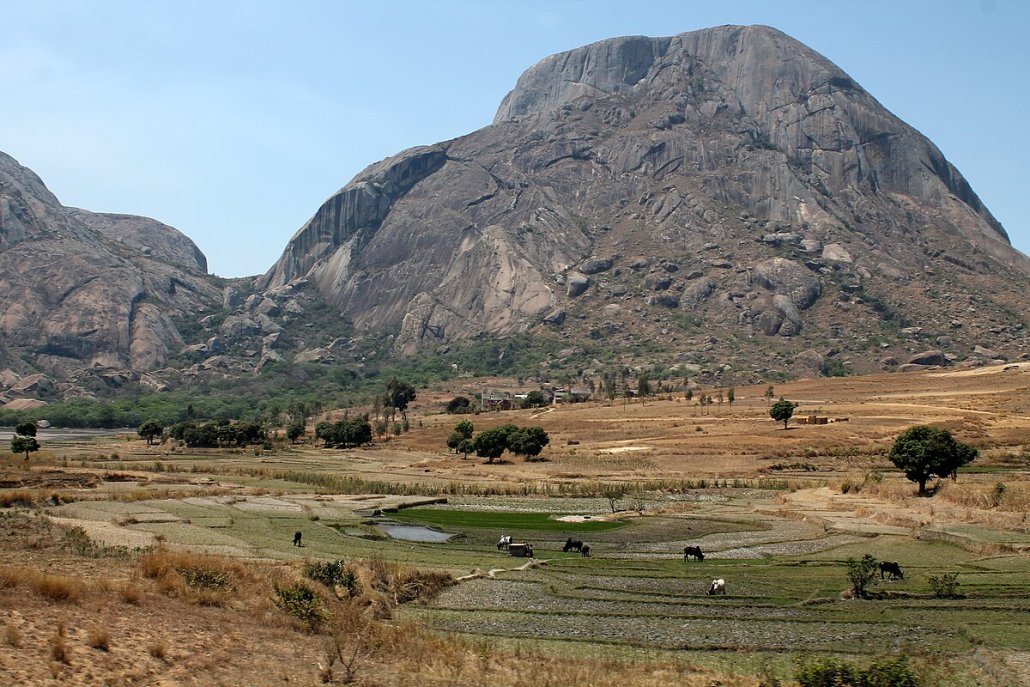 Heinonlein Attribution-ShareAlike 4.0 International CC BY-SA 4.0 Deed
 Rising temperatures in Africa are driving plant species to spread at higher altitudes, a German study claims. But the process is too fast, and the risk of losing their habitat is growing as a result
by Matteo Cavallito
Climate change is known to stimulate the “migration” to higher altitudes of plant species that have adapted to colder temperatures. However, this process does not seem to occur with the same intensity in different areas of the planet. In Africa, in particular, this shift could happen at a much faster rate than average, which limits the ability of some species to find a suitable habitat. This phenomenon would mainly affect endemic species that already live at higher altitudes and have no further room for migration. This is the conclusion of a study published in the journal Global Change Biology.
A study of over 600 species in Africa
The research, led by the University of Passau in Germany, involved an international group of scientists in the development of statistical distribution models taking into account various variables: environmental preferences of plant species, their dispersal capacity, and estimates on land use and climate change by the end of the century. The study, a statement explains, collected a total of 419,055 plant records from international databases and other sources.
These include 7,378 species endemic to African mountains, 607 of which are supported by sufficient botanical data.
Models then were applied to the species by simulating three emission scenarios developed by the IPCC, the Intergovernmental Panel on Climate Change. By including different types of dispersal (wind and ballistic, for example), the authors were able to rely on particularly realistic models. The conclusions draws a problematic context even in a climate scenario in line with global mitigation targets.
Some species could lose 90% of their habitat
“Our projections indicate that keeping warming under 2°C until 2100 under a sustainability scenario (i.e., the so-called ”SSP1.26 scenario” of the IPCC classification, which predicts an increase in global surface temperature – that is the global average of land and sea surface temperatures – of 1.8 °C between now and the end of the century, ed.), almost half (49.3%) of the species would experience a contraction in suitable areas,” explains the study. In the worst-case scenarios – SSP3.70 and SSP5.85 with projected increases of 3.6 °C and 4.4 °C respectively – the problem would affect up to three-quarters of species (71%-75.6%).
In Africa, the study notes, estimates predict “rates of upslope shifts that may be up to three times higher than the global calculated average.”
Species living at higher altitudes or in isolated mountain ranges would be affected even more. Although generally able to withstand the new conditions better than grasses and ferns, trees and shrubs may face complex scenarios in some cases. Some tree species, the statement points out, would end up losing more than 90% of their suitable habitat in high-emission scenarios.
Control of land use change is crucial
“Our findings align with previously reported trends of upslope shifts of species distributions but suggest that accelerated rates of change may limit the capacity of some species to track their niche based solely on their natural dispersal capacity,” the study continues. In all emission scenarios, the loss of species richness would be greatest in the mountains of Madagascar, the highlands of East Africa, and the mountain ranges of South Africa.
The survival of diverse vegetation, researchers say, depends on the dispersal capacity of plants, which only occurs under certain conditions, such as the presence of connections between different habitats and the continuity of biotic interactions such as pollination.
The rate of change is determined by the acceleration of global warming and land management. For this reason, “Next to reducing global CO2 emissions, it is crucial to tackle land use change, which may also be linked to global trade and development,” says Christine Schmitt, professor at the University of Passau. “Cultivation outside the natural range (ex-situ conservation) and seed banks would be practicable measures of last resort to protect the most endangered species.”
 Jonathan Wilkins Attribution-ShareAlike 3.0 Unported CC BY-SA 3.0 Deed
  Melissa McMasters Attribution 2.0 Generic CC BY 2.0 Deed