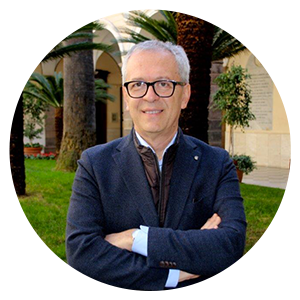
Sara Guerrini has 20 years of experience in the sector of bioplastics for agricultural applications and their effects end of life in the environment, in the framework of circular bioeconomy, starting from technical activities to marketing development and sales, finally to stakeholder engagement bringing to an overall view, and well developed knowledge of the dynamics of this sector. Her experience is rooted not just in forming strategy and shaping legislation based on scientific evidence, but also in the practicalities and challenges of implementing new policies.
In 2020 she has started a collaboration with Re Soil Foundation, following the aspect of stakeholders engagement and the constitution of a network of Lighthouse Farms.
She holds a degree in Agricultural Sciences from the University of Bologna, where she also obtained a Master in “Management of agro-environmental systems” and a PhD in Soil Chemistry on the effect of biodegradable mulch films in soil in collaboration with the University of Bologna.
She is author of several articles and scientific publications, such as the Chapter on “Biodegradable Materials is Agriculture: case histories and perspectives” in “Soil Degradable Bioplastics for a Sustainable Modern Agriculture”, editor Mario Malinconico, Springer.
She is member of the following professional associations: APE Europe (Vice President), RESOIL Foundation (with the role of coordinator of internal Technical Group), CIPA (Comité International des Plastiques en Agriculture), Assofertilizzanti (Italy), Association “Chimica Verde” (Italy), European Bioplastics (in a group dedicate to agricultural applications), Assobioplastiche (Italian association of bioplastics), Asobiocom (Spanish association of
bioplastics) and member of the EU Commission’s Expert Group on Fertilizing Producrs. She also collaborates with UNI (Italy), CEN CT/249, for the standardization of agricultural plastics and NYCE (Mexican committee for standardization).

 https://resoilfoundation.org/wp-content/uploads/2024/12/rogero.png
300
300
Nicola Vuolo
https://resoilfoundation.org/wp-content/uploads/2020/01/logo_resoilfoundation.png
Nicola Vuolo2024-12-12 10:05:432024-12-12 10:06:38Pier Paolo Roggero
https://resoilfoundation.org/wp-content/uploads/2024/12/rogero.png
300
300
Nicola Vuolo
https://resoilfoundation.org/wp-content/uploads/2020/01/logo_resoilfoundation.png
Nicola Vuolo2024-12-12 10:05:432024-12-12 10:06:38Pier Paolo Roggero https://resoilfoundation.org/wp-content/uploads/2024/11/sara_guerrini.png
300
300
Nicola Vuolo
https://resoilfoundation.org/wp-content/uploads/2020/01/logo_resoilfoundation.png
Nicola Vuolo2024-11-28 15:06:052024-11-28 15:08:28Sara Guerrini
https://resoilfoundation.org/wp-content/uploads/2024/11/sara_guerrini.png
300
300
Nicola Vuolo
https://resoilfoundation.org/wp-content/uploads/2020/01/logo_resoilfoundation.png
Nicola Vuolo2024-11-28 15:06:052024-11-28 15:08:28Sara Guerrini https://resoilfoundation.org/wp-content/uploads/2024/10/deleonardis.png
282
282
Nicola Vuolo
https://resoilfoundation.org/wp-content/uploads/2020/01/logo_resoilfoundation.png
Nicola Vuolo2024-10-31 15:48:212024-11-05 14:24:38Francesco de Leonardis
https://resoilfoundation.org/wp-content/uploads/2024/10/deleonardis.png
282
282
Nicola Vuolo
https://resoilfoundation.org/wp-content/uploads/2020/01/logo_resoilfoundation.png
Nicola Vuolo2024-10-31 15:48:212024-11-05 14:24:38Francesco de Leonardis https://resoilfoundation.org/wp-content/uploads/2024/10/Michelina_Ruocco.png
300
300
Nicola Vuolo
https://resoilfoundation.org/wp-content/uploads/2020/01/logo_resoilfoundation.png
Nicola Vuolo2024-10-31 15:45:152024-11-04 15:11:22Michelina Ruocco
https://resoilfoundation.org/wp-content/uploads/2024/10/Michelina_Ruocco.png
300
300
Nicola Vuolo
https://resoilfoundation.org/wp-content/uploads/2020/01/logo_resoilfoundation.png
Nicola Vuolo2024-10-31 15:45:152024-11-04 15:11:22Michelina Ruocco https://resoilfoundation.org/wp-content/uploads/2024/10/tanja_mimmo.png
300
300
Nicola Vuolo
https://resoilfoundation.org/wp-content/uploads/2020/01/logo_resoilfoundation.png
Nicola Vuolo2024-10-31 15:43:322024-11-05 15:39:27Tanja Mimmo
https://resoilfoundation.org/wp-content/uploads/2024/10/tanja_mimmo.png
300
300
Nicola Vuolo
https://resoilfoundation.org/wp-content/uploads/2020/01/logo_resoilfoundation.png
Nicola Vuolo2024-10-31 15:43:322024-11-05 15:39:27Tanja Mimmo https://resoilfoundation.org/wp-content/uploads/2024/10/benito_scazziota.png
282
282
Nicola Vuolo
https://resoilfoundation.org/wp-content/uploads/2020/01/logo_resoilfoundation.png
Nicola Vuolo2024-10-31 15:40:232024-11-05 10:51:56Benito Scazziota
https://resoilfoundation.org/wp-content/uploads/2024/10/benito_scazziota.png
282
282
Nicola Vuolo
https://resoilfoundation.org/wp-content/uploads/2020/01/logo_resoilfoundation.png
Nicola Vuolo2024-10-31 15:40:232024-11-05 10:51:56Benito Scazziota https://resoilfoundation.org/wp-content/uploads/2024/10/Fabrizio-Adani.png
300
300
Nicola Vuolo
https://resoilfoundation.org/wp-content/uploads/2020/01/logo_resoilfoundation.png
Nicola Vuolo2024-10-25 16:38:272024-11-04 15:29:10Fabrizio Adani
https://resoilfoundation.org/wp-content/uploads/2024/10/Fabrizio-Adani.png
300
300
Nicola Vuolo
https://resoilfoundation.org/wp-content/uploads/2020/01/logo_resoilfoundation.png
Nicola Vuolo2024-10-25 16:38:272024-11-04 15:29:10Fabrizio Adani https://resoilfoundation.org/wp-content/uploads/2024/10/Teresa-Del-Giudice.png
300
300
Nicola Vuolo
https://resoilfoundation.org/wp-content/uploads/2020/01/logo_resoilfoundation.png
Nicola Vuolo2024-10-25 16:37:462024-10-29 15:31:03Teresa Del Giudice
https://resoilfoundation.org/wp-content/uploads/2024/10/Teresa-Del-Giudice.png
300
300
Nicola Vuolo
https://resoilfoundation.org/wp-content/uploads/2020/01/logo_resoilfoundation.png
Nicola Vuolo2024-10-25 16:37:462024-10-29 15:31:03Teresa Del Giudice https://resoilfoundation.org/wp-content/uploads/2024/10/Yari-Vecchio.png
300
300
Nicola Vuolo
https://resoilfoundation.org/wp-content/uploads/2020/01/logo_resoilfoundation.png
Nicola Vuolo2024-10-25 16:36:572024-10-29 15:32:13Yari Vecchio
https://resoilfoundation.org/wp-content/uploads/2024/10/Yari-Vecchio.png
300
300
Nicola Vuolo
https://resoilfoundation.org/wp-content/uploads/2020/01/logo_resoilfoundation.png
Nicola Vuolo2024-10-25 16:36:572024-10-29 15:32:13Yari Vecchio https://resoilfoundation.org/wp-content/uploads/2024/10/Massimo-Centemero.png
300
300
Nicola Vuolo
https://resoilfoundation.org/wp-content/uploads/2020/01/logo_resoilfoundation.png
Nicola Vuolo2024-10-25 16:36:192024-10-29 15:33:29Massimo Centemero
https://resoilfoundation.org/wp-content/uploads/2024/10/Massimo-Centemero.png
300
300
Nicola Vuolo
https://resoilfoundation.org/wp-content/uploads/2020/01/logo_resoilfoundation.png
Nicola Vuolo2024-10-25 16:36:192024-10-29 15:33:29Massimo Centemero