
Biodiversity of crops promotes carbon sequestration
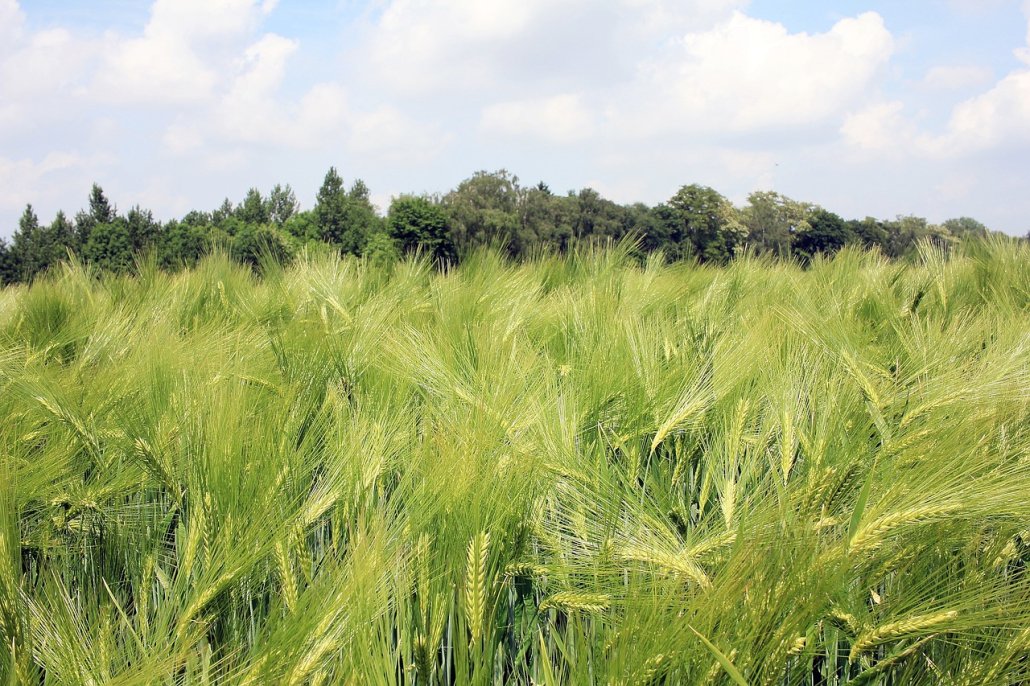 Photo: pixabay Free for use under the Pixabay Content License
In barley fields, the application of other crops promotes increased carbon sequestration by modulating the relationships between microbes, the University of Helsinki has found
by Matteo Cavallito
Increasing biodiversity in agricultural soils promotes an increase in plant biomass and improves plant-microbe interactions, two factors that favour carbon storage. This is supported by a study from the University of Helsinki. The investigation focused on the ability of plants to influence the structure and functioning of microbial communities in the subsoil as well as carbon utilisation efficiency at the root level.
The study on barley
The existence of a positive relationship between the number of plant species and the presence of certain ecosystem functions, such as carbon sequestration in the soil, has already been amply demonstrated experimentally, researchers explain. Between fields that emulate wild plant communities and agricultural ecosystems, however, there are many differences, starting with the presence of a single dominant species in the latter.
In order to test the validity of the relationship between biodiversity and system functionality, the authors conducted a trial on some land that had already been the subject of a previous experiment – called ‘TwinWin ’ – on the effects of sowing a mix of different species.
“Here, barley (Hordeum vulgare L. var. Harbinger) was planted as the main crop and fertilized with 80 kg N ha−1 yearly,” the study explains. “The full TwinWin experimental design consists of barley planted in monoculture with herbicide (4 plots) and without herbicide (8 plots) or with increasing levels of undersown plant diversity (i.e. barley monoculture, barley plus 1 undersown specie, barley plus 2 undersown species, barley plus 4 undersown species and barley plus 8 undersown species.” The speed with which soil microbes responded positively to plant diversity, even in the presence of the dominant species, surprised the researchers.
Microbes increase carbon sequestration
The authors, in particular, observed a higher organic carbon content at the level of the rhizosphere – the root zone – noting a greater diversity of subterranean species accompanying barley. This fact is consistent with the results of previous studies: “Plant diversity can increase plant biomass inputs into soil due to increased productivity, which might explain why higher total soil organic C content is observed in more diverse plant communities,” the study states.
Microbes, the researchers recall, are key regulators of soil carbon stocks: “”For this reason, understanding the influence of plant productivity, composition and diversity on microorganism physiology is of ultimate importance.”
Moreover, “”Here, we used network analyses to capture how a plant diversity gradient impacts the potential associations within the bacterial and fungal microbial communities in the rhizosphere of barley”, proseguono gli autori. “Overall, our results suggest that plant diversity enhanced positive associations within the bacterial community compared to the negative associations.”
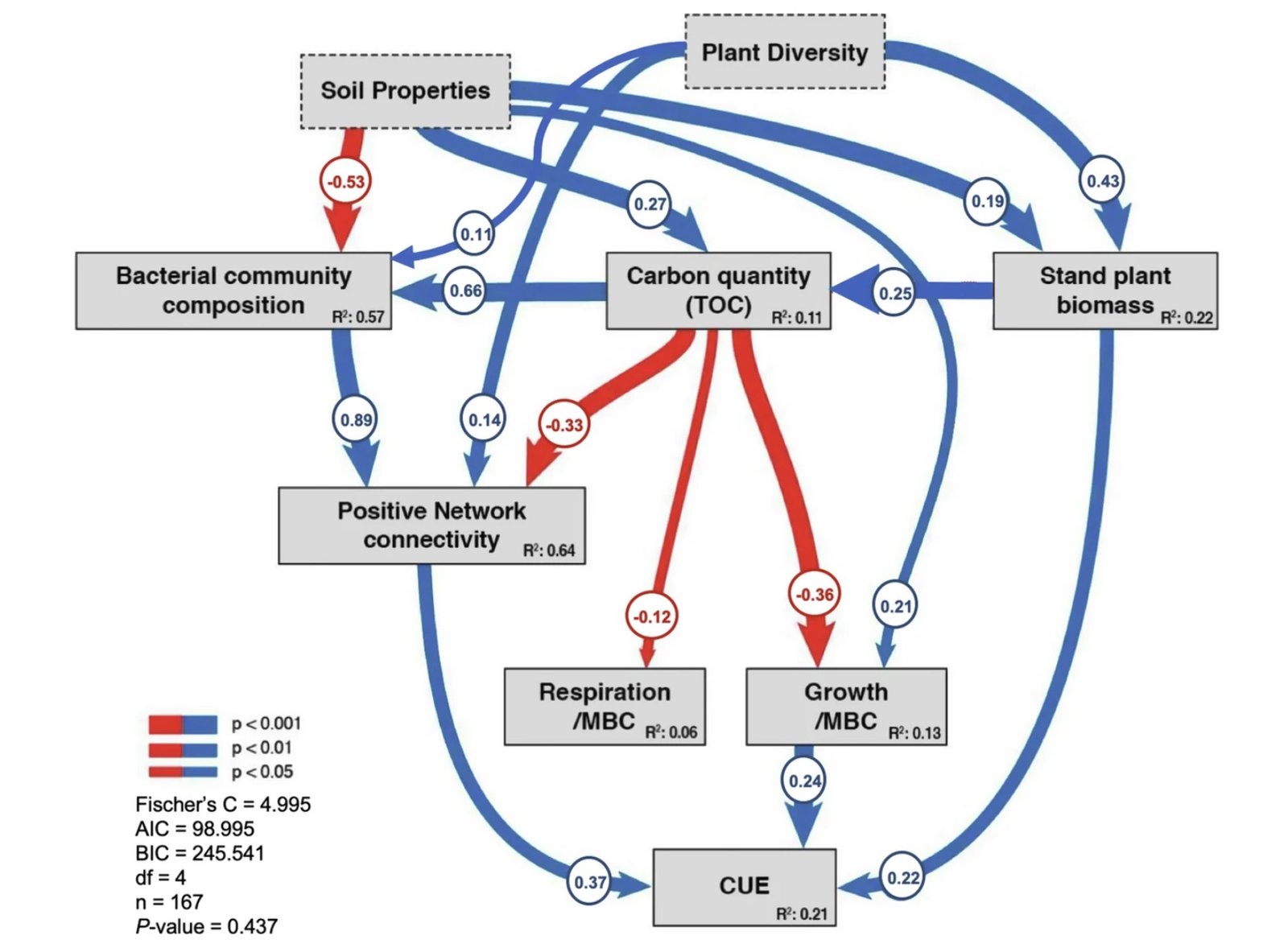
Correlation model between plant diversity and soil and plant biomass properties on carbon utilisation efficiency.
Agricultural soils must be part of the solution to climate change
The expansion and intensification of agriculture, the study notes, has led to a loss of soil carbon. Since agro-ecosystems cover more than 40 per cent of the earth’s surface, the research continues, they must be “part of the solution put in action to mitigate climate change.” The development of efficient management practices to maximise soil carbon sequestration, however, is currently also limited due to a lack of understanding of the very interactions between plants and microorganisms.
“Our findings indicate that promoting plant diversity in agriculture could be an effective strategy for improving carbon sequestration of agricultural soils,” says Anna-Liisa Laine, researcher at the Faculty of Biological and Environmental Sciences, University of Helsinki and co-author of the research. “In practice, even a small improvement in the carbon retention capacity of fields can be significant, as a large share of land area globally has been harnessed for food production,”
 Ian Sharp Attribution-ShareAlike 2.0 Generic CC BY-SA 2.0 Deed
  Rod Waddington Attribution-ShareAlike 2.0 Generic CC BY-SA 2.0 Deed
  Thpelin Attribution-ShareAlike 3.0 Unported CC BY-SA 3.0 Deed


