When soils dry out, heatwaves intensify
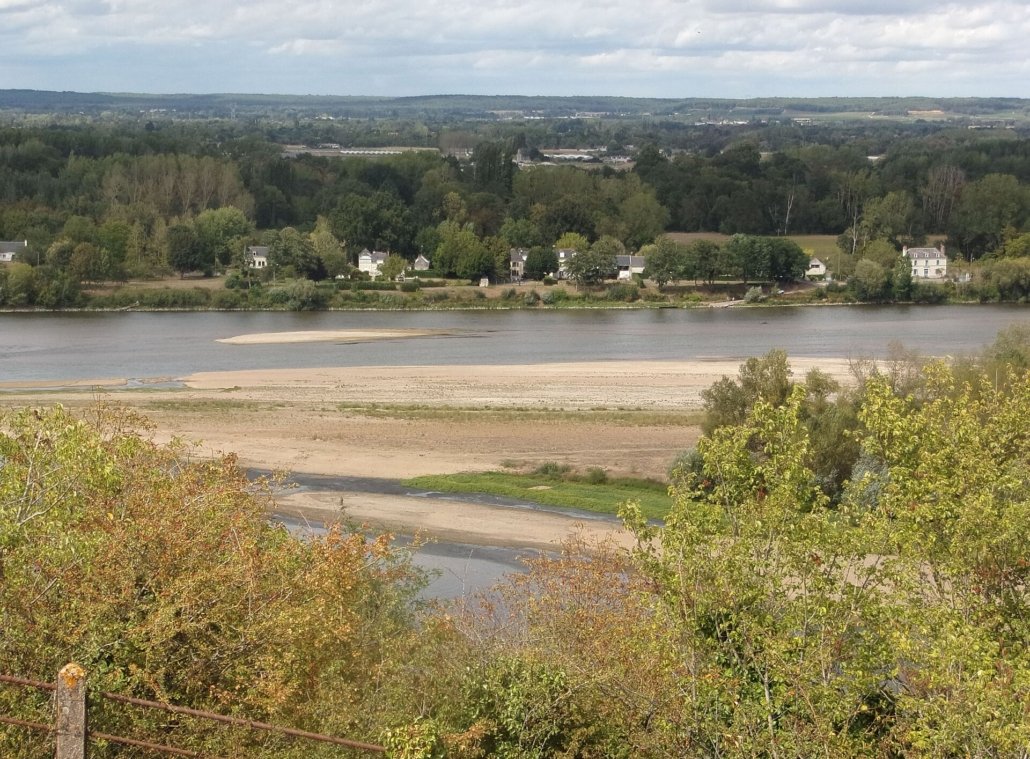 Joël Thibault, CC BY-SA 4.0.
A study shows how atmospheric circulation, soil moisture and temperature reinforce one another once a critical threshold is crossed. In the humid mid-latitude areas, it accounts for about a tenth of the peak temperature anomaly
by Matteo Cavallito
Once temperatures cross a certain threshold, drying soils can push them even higher. The mechanism was identified in a study led by the Potsdam Institute for Climate Impact Research (PIK) and the International Institute for Applied Systems Analysis (IIASA). The researchers found that during the most extreme heatwaves, atmospheric circulation, soil drying and rising temperatures can reinforce one another.
How soil moisture slows surface warming
Under high-pressure conditions, the researchers note, more solar radiation can reach the surface. When the soil is moist, some of that energy goes into evaporation from the soil and transpiration from plants, helping limit the warming of the surface and the air. During a prolonged heatwave, however, soils can dry out enough to limit evapotranspiration. More of the available energy then goes directly into heating the ground and the air above it.
“In humid environments, evapotranspiration is typically energy-limited under normal summer conditions but shifts abruptly to water limitation following intense soil-moisture depletion during prolonged heat waves”, the study explains.
As a result, “humid regions experience the most rapid and pronounced soil-moisture decline during heat-wave evolution, with a spatially averaged reduction of 1.4 standard deviations (a statistical unit that expresses the size of the decline relative to the variability of soil moisture, ed.) within approximately 12 days, thereby leading to a stronger interaction activation once the threshold is exceeded”.
The critical threshold
In the study published in Science Advances, the authors used a machine learning model to estimate the contribution of each factor. They found that “a three-way interaction among these components becomes active once a critical temperature threshold is exceeded, contributing, on average, approximately 10% to peak temperature anomalies during the most extreme heat events across ∼28% of humid mid-latitude regions”. In the areas where the mechanism was identified, the threshold is, on average, about 4 °C above the local summer baseline.
In Central Europe, the study found, the probability of exceeding the threshold rose from 6% in 1979–1983 to 23% in 2018–2022, “allowing more summer days to enter the activated interaction regime”.
“When we look at these mega heatwaves that have been significantly outstripping previous temperature records, what we’re seeing is that once you reach a certain temperature, all three factors – drying soils, high pressure and extreme heat – begin to interact and drive each other further in a way that we haven’t understood before”, explained Yinglin Tian, a researcher at PIK and the study’s lead author.
Climate models may underestimate peak temperatures
The study also sheds light on why climate models may underestimate peak temperatures. In humid regions, the soil still holds enough water at the start of a heatwave to help cool the surface. If the heat persists, the soil loses moisture and this cooling effect drops sharply, allowing temperatures to rise further.
In the climate models analysed, however, soils are already too dry at the start of the heatwave. As a result, the models simulate less soil drying over the course of the heatwave than the reference data show.
The models therefore capture less of the extra warming that occurs as soils dry out. “These findings help explain regional model biases in upper-tail warming and highlight avenues for improving future projections of extreme heat events”, the authors conclude.
 Zietz, CC BY 3.0 (Attribution 3.0 Unported).
 Photo: AusAID / Department of Foreign Affairs and Trade, CC BY 2.0
 Consorzio Biorepack