Chinese researchers propose a new indicator to assess soil carbon stability
 Rain Photography Pexels free to use
 Research conducted by the Beijing Academy of Sciences has defined a new framework for assessing the Microbial Carbon Pump in soil. It distinguishes between stable and non stable organic matter (that is more easily decomposed and released)
by Matteo Cavallito
Carbon sequestration is essential for climate mitigation and soil health. Of particular interest is the stabilization of the element (which prevents its release into the atmosphere), to which microorganisms contribute, in part, through the decomposition of their necromass. Understanding this dynamic is clearly crucial to defining long-term sustainable soil management. This is why some scientists are now proposing a new reference model for assessing this process by identifying some key aspects of the so-called Microbial Carbon Pump (MCP) in soil.
An indicator of efficacy
The concept echoes the better-known “marine biological carbon pump” which defines the oceans’ capacity to sequester carbon from the atmosphere. Its “microbial” variant, explains a research group from the Institute of Applied Ecology at the Chinese Academy of Sciences, “highlights the role of microbial-derived carbon in SOC transformation and sequestration.” Over the years, there have beeneveral studies on this phenomenon. Despite this, however, “direct assessments grounded in the MCP concept have largely lagged behind,” explains the study published in the journal Soil Biology and Biochemistry.
In the research, the authors continue, “we distill important aspects of soil MCP assessment by reviewing relevant literature, showcasing model scenarios, and exploring rational perspectives on sustainable soil carbon management.”
The study, according to a statement, focused on the third phase of a three-stage process—reaction, behavior, and effect—from a long-term perspective. In doing so, they introduced a new indicator called ΔMCP efficacy. The indicator quantifies the level of synchrony or asynchrony between changes in microbial necromass and organic carbon levels. Synchrony refers to situations in which microbial residues and carbon itself increase or decrease at comparable rates. When the changes between the two processes do not match, there is asynchrony.
Measuring carbon amount is not enough
The research evaluated 13 possible scenarios of change and reached a crucial conclusion: simply measuring the amount of stored carbon can be misleading. If this growth is determined by unstable and easily decomposable carbon, for example, there may be no long-term climate benefits. In contrast, the accumulation of carbon produced by microbial residues appears to be more resilient and resistant to interference.
This is where the indicator comes into play: a ΔMCP efficacy greater than zero indicates a stronger contribution from the necromass of microorganisms, i.e., greater stability of the carbon pool.
A negative efficacy, on the other hand, indicates a growing incidence of non-microbial sources that would make soil sequestration more unstable. “We believe that △MCP efficacy can be seen as an important assessment metric, since it captures the evolving tendency of functional responses of the soil MCP to relate to SOC storage,” the scientists explain. “We further believe the conceptual framework that aggregates all possible scenarios of △MCP efficacy can allow for a holistic understanding of how an efficient MCP sequesters C in soils.”
More accurate assessments for climate mitigation
By distinguishing between stable and unstable forms of carbon accumulation, the microbial pump-based assessment system allows for a more reliable evaluation of practices that promote carbon sequestration in the soil. This has clear implications for the development of climate mitigation and sustainable agriculture practices.
“Our ultimate objective is to make the soil MCP concept adoptable for practical application by applying a quantitative metric that is embedded within a conceptual, unifying, and standardized reference framework,” the scientists conclude. “Thereby enhancing data interpretation, advancing theoretical understanding of microbial-mediated SOC sequestration, and assisting in devising tailored management practices to maintain soil C sustainability.”
 Mokkie/Wikimedia Commons – CC BY-SA 3.0
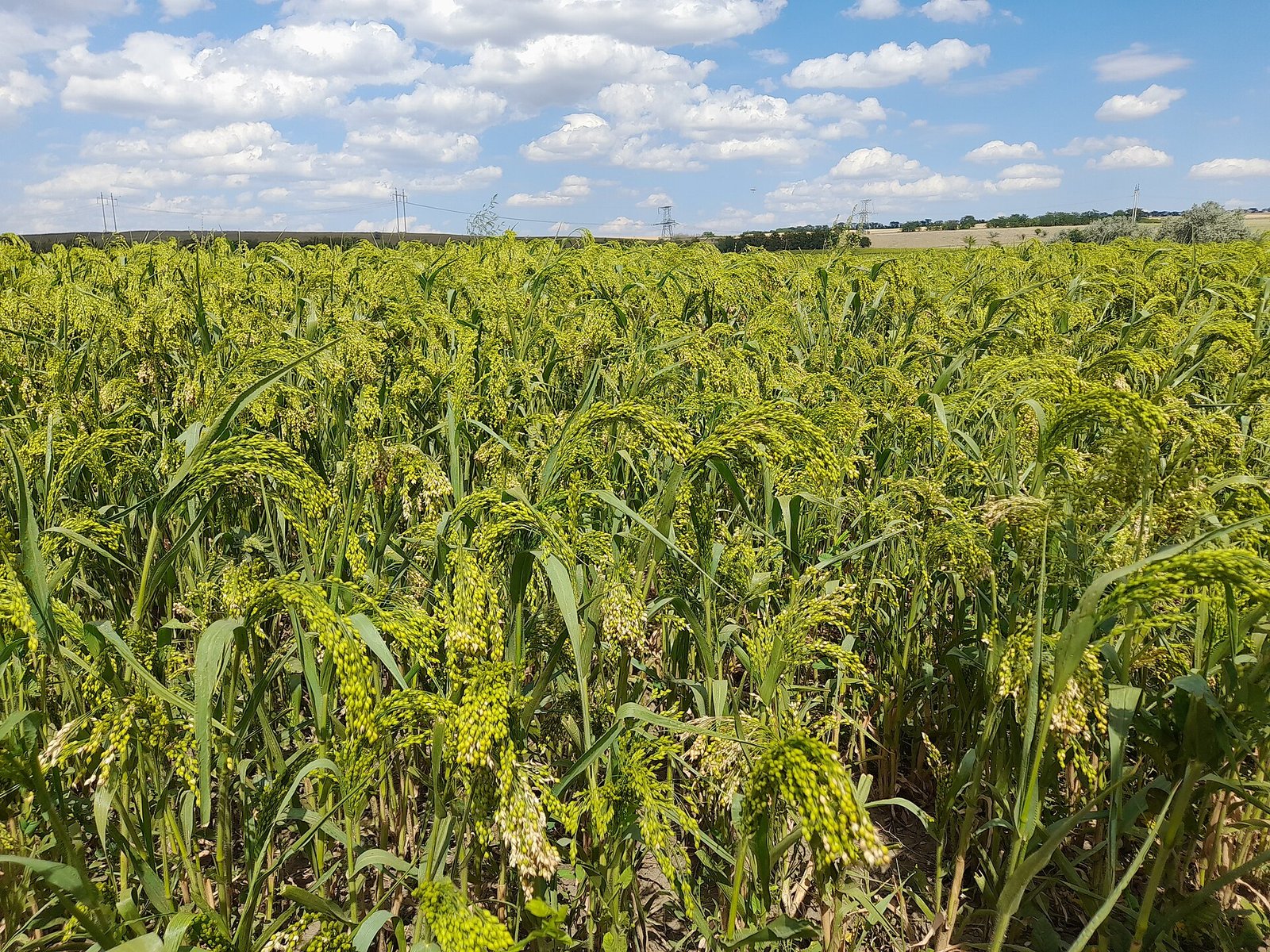 Yuriy Kvach/Wikimedia Commons – CC BY-SA 4.0
 © European Union 2018 (photo by Pavel Koubek), CC BY-NC-ND 2.0