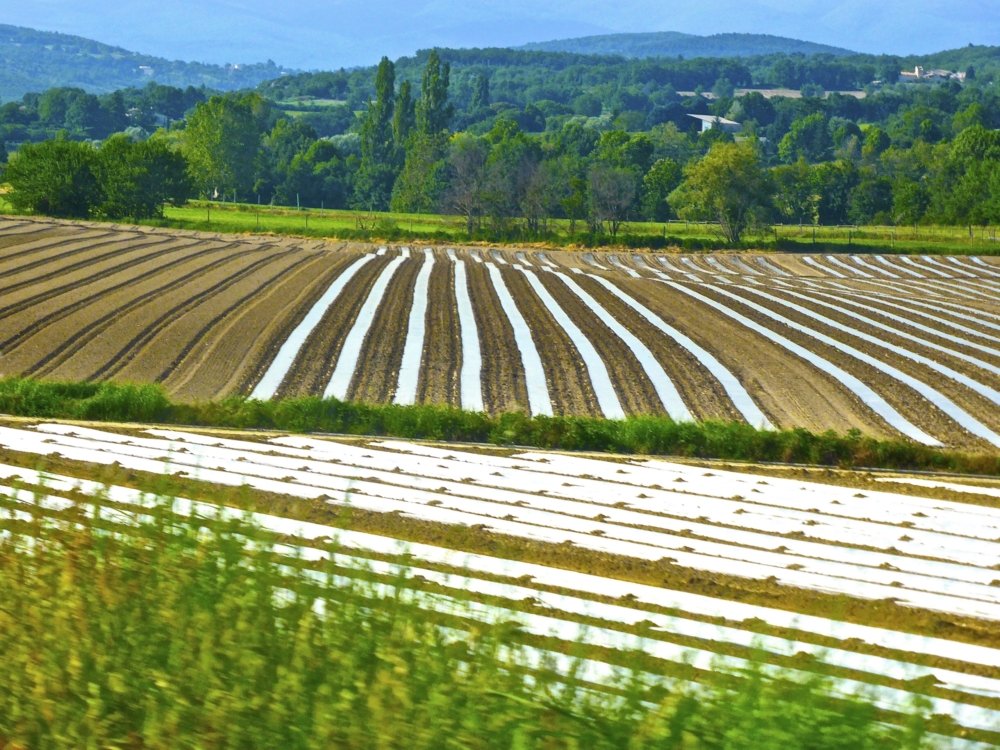
Climate change has reduced grain yields by up to 13 percent in 50 years
 Photo Dag Endresen Attribution 2.0 Generic CC BY 2.0 Deed
Warmer and dryer weather favors water stress thus impacting the productivity of wheat, corn and barley crops, a study from the Standford University has found. New investments and more accurate predictive models are needed for the future
by Matteo Cavallito
Rising temperatures and reduced atmospheric moisture have caused a decline in global grain yields over the past half-century. This is supported by a Stanford University study published in Proceedings of the National Academy of Sciences. The findings of the survey are an important warning asfthe world faces several climate-related problems, including desertification and drought, that are currently impacting agriculture.
“The productivity of staple crops is a key factor shaping the affordability of food and the amount of land and other resources used in agriculture,” the study observes. “Most cropping regions have experienced both rapid warming and atmospheric drying, with significant negative global yield impacts for three of the five crops.”
Yield declines can be as much as 13 percent
The authors examined agroclimatic conditions affecting the world’s most widely grown cereal crops over the past half century. Most regions, they explain, have experienced rapid warming that has affected 45 percent of cultivated areas in summer and 32 percent of those managed in winter. Also rising is the vapour-pressure deficit (VPD), a key factor in plant water stress, which has increased in most temperate regions. Less noticeable, finally, is the change in rainfall.
“Linking agroclimatic data to crop productivity, we estimate that climate trends have caused current global yields of wheat, maize, and barley to be 10, 4, and 13% lower than they would have otherwise been,” the study explains.
Moreover, “These losses likely exceeded the benefits of CO2 increases (including improved plant growth and yield thanks to increased photosynthesis ed.) over the same period, whereas CO2 benefits likely exceeded climate-related losses for soybean and rice.”
The problem with prediction models
The research, the scientists explain, showed that the results were consistent with predictions expressed by climate models that have been in use for years. This consistency, however, actually hides two opposite errors that ended up substantially offsetting each other.
In detail, in fact, “models substantially overestimate the amount of warming and drying experienced by summer crops in North America.” At the same time, however, they “underestimate the increase in VPD in most temperate cropping regions.”
These findings, the research adds, “can help to guide adaptation efforts and model improvements.” In particular, they can especially help scientists make more accurate predictions in the future. And to design more effective adaptation strategies.
Climate change calls for new investments
The urgency of improving forecasting models and adopting more forward-looking agricultural policies, a researchers’ statement says, had already emerged in a recent study published in March. The research, conducted by Stanford researchers in collaboration with colleagues at Cornell and the University of Maryland, had suggested a slowdown in U.S. agricultural productivity in the coming decades and emphasized the need to counteract it by making significant investments in climate adaptation practices.
Depending on different scenarios, the study explained, “offsetting the climate-induced productivity slowdown by 2050 will require R&D spending over 2021 to 2050 to grow at 5.2 to 7.8% per year or by an additional $2.2 to $3.8B per year in addition to the current spending of ~$5B per year.” An effort “comparable in ambition to the public R&D spending growth that followed the two World Wars.”
 Photo: Thomas Bjørkan CC BY-SA 3.0
 Re Soil Foundation