
More trees in urban boreal forests are getting killed by climate change
 Pekka Nikrus Attribution-NonCommercial-ShareAlike 2.0 Generic CC BY-NC-SA 2.0 Deed
 Trees are increasingly falling victim to certain phenomena related to global warming such as drought, heat, fire and increased pests, a Finnish research has found. The figures from Helsinki’s “Central Park”
by Matteo Cavallito
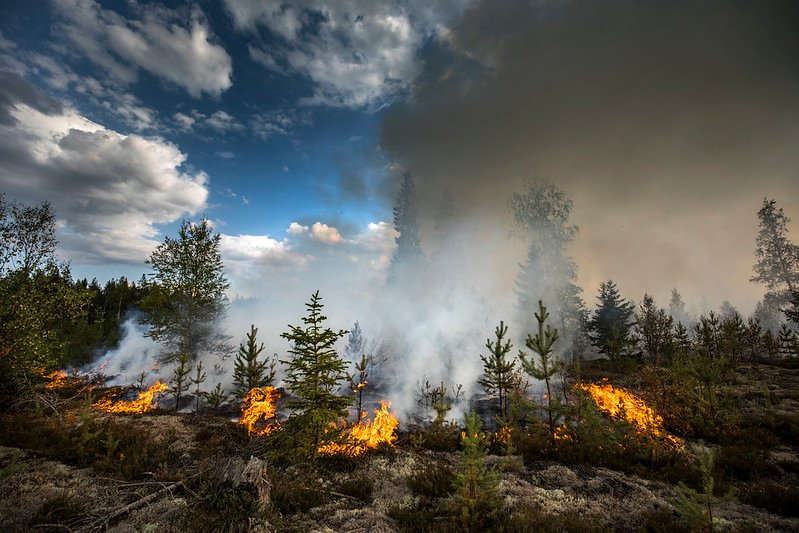
Some factors related to climate change are causing an increase in tree mortality in dry areas of urban forests. This is claimed by a study from the University of Eastern Finland in Joensuu, which emphasizes the impact of droughts, heat waves, pests and fires. “Increased tree mortality rates have been observed worldwide in connection to climate warming-related processes, such as drought, heat, fire, and insect pest outbreaks,” the study explains.
Therefore, the research continues, “An understanding of the drivers of tree mortality during the Anthropocene is urgently needed to estimate forest vulnerability in a warmer climate.”
The research
The survey, whose results were published in the journal Urban Forestry and Urban Greening, focused on an urban forest in the Finnish capital known as Helsinki Central Park. In the area there are three main tree species: Norway spruce, Scots pine, and silver birch. The authors used aerial images captured between 2005 and 2021 with spatial resolutions from 20 cm to 5 cm.
Also examining digital plant elevation data, forest inventory and soil types that characterize the surrounding environment, researchers also analyzed climate variables such as temperature, precipitation, humidity and aridity index for each year and month. Determining tree mortality, the scientists say, are aspects such as topographic location and forest characteristics.
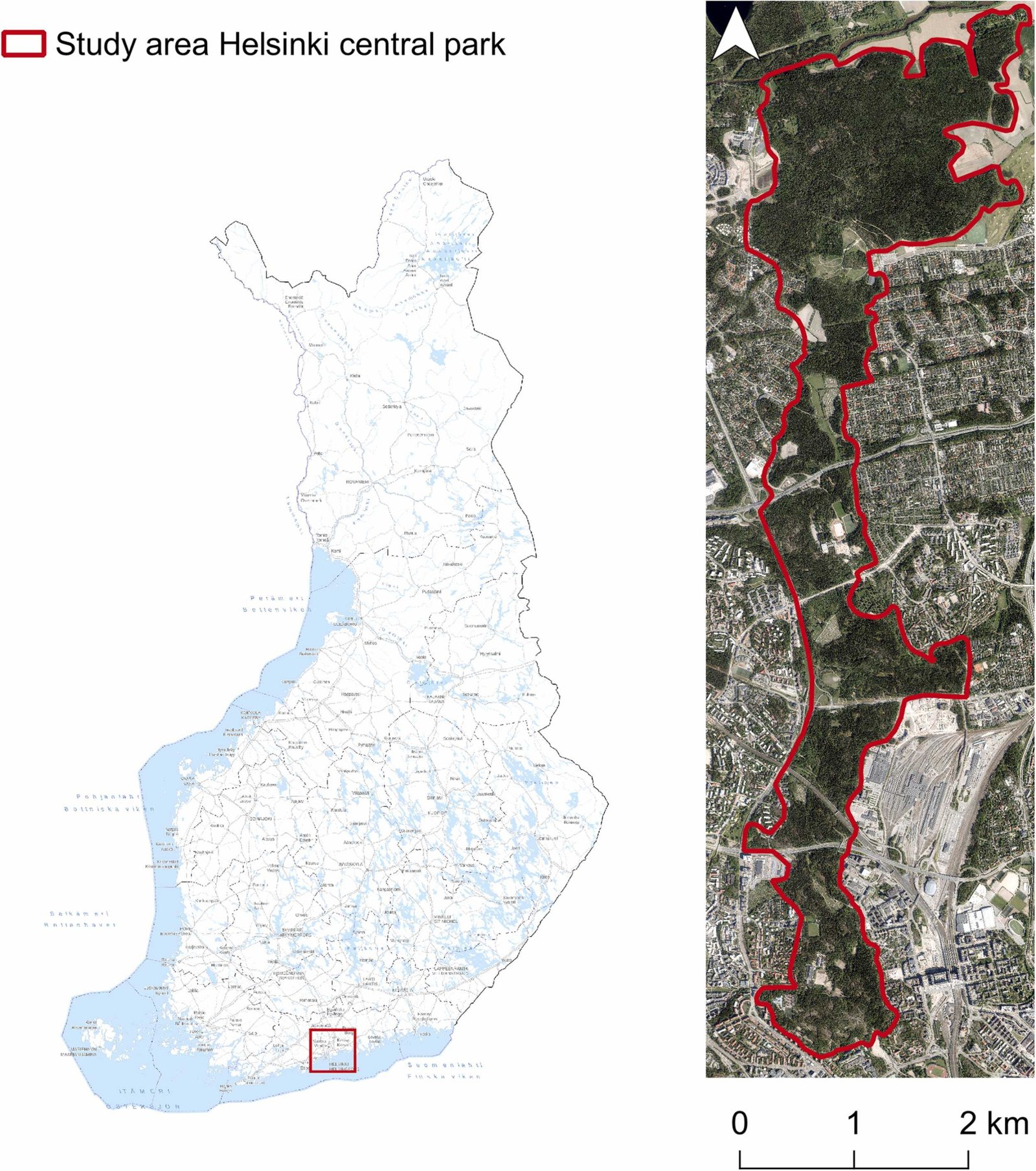
The study area is an approximate 10 km-long forested green space that runs the length of Helsinki from south to north, starting near the city centre in Laakso and ending at the northern border of the city in Haltiala and the river Vantaanjoki. Source: Helsinki Map Service, 2022, National Land Survey of Finland, 2022 Attribution 4.0 International CC BY 4.0 Deed
Six thousand trees dead, nearly a third in 2021 alone
The study thus showed an increase in tree mortality, which reached a record 473 trees per year in the last five-year period under review. This compares to 379 in 2005-09. Over the 16 years of the period under review, the incidence of deaths increased from 0.5 to 0.6 specimens per hectare. “In total, 6008 dead trees were observed from the aerial images collected during the monitoring period,” the research explains. 1,892 of these in 2021 alone.
“Our results showed that drought-related variables, i.e., the standardised precipitation evapotranspiration index and the Palmer drought severity index, were linked with increased tree mortality rates.”
In addition, “the stand-level basal area predicted tree mortality risk and was linked to site type; smaller basal area stands were located on rocky dry soils, resulting in a greater probability of tree mortality”. Finally, “trees at high elevations or on steep slopes showed a greater mortality risk.”
The importance of urban forests
According to Samuli Junttila, a professor at the University of Eastern Finland and co-author of the study led by fellow researcher Johanna Jääskeläinen, the results provide important insights in light of climate neutrality goals for urban areas. The findings, in particular, can help to effectively plan the management of growth sites.
Nevertheless, Junttila explains, this does not mean that trees growing on high-risk sites should be ignored. Urban forests, after all, play a very important role. Just like extra-urban forests, in fact, they sequester CO2, thus contributing to climate mitigation, cooling temperatures and preventing the heat island effect. Which benefit of people and, of course, the trees.
 Mokkie/Wikimedia Commons – CC BY-SA 3.0
 Yuriy Kvach/Wikimedia Commons – CC BY-SA 4.0
 © European Union 2018 (photo by Pavel Koubek), CC BY-NC-ND 2.0


