Insect waste can be a viable alternative to traditional fertilizers
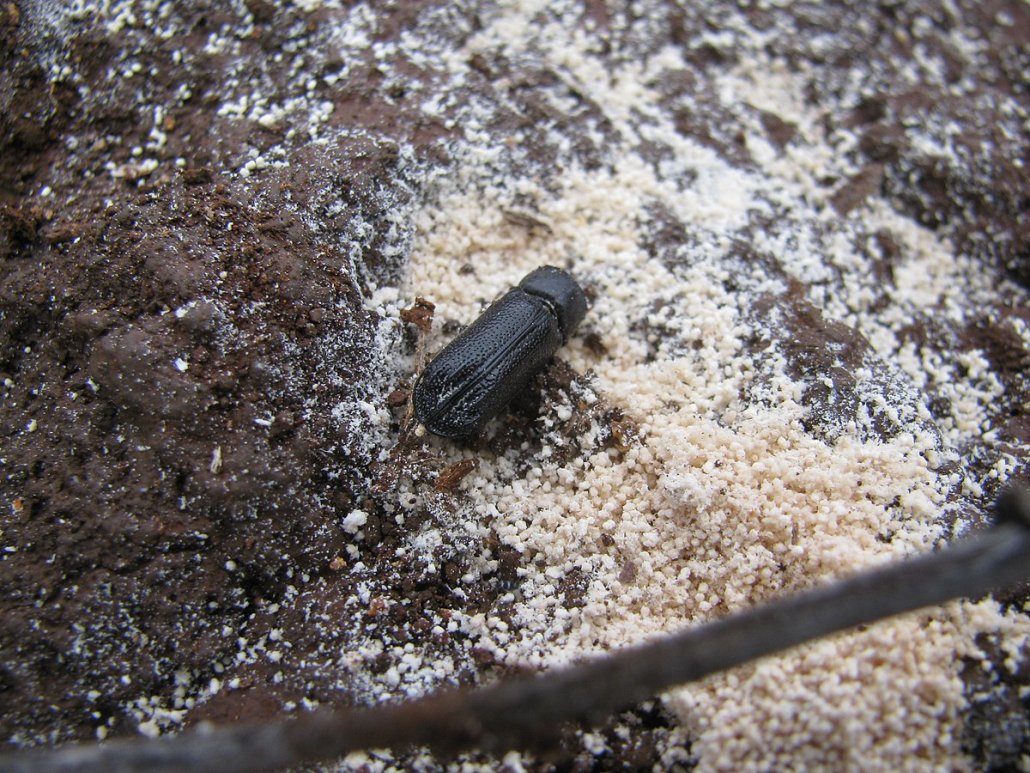 Forest & Kim Starr Attribution 3.0 United States CC BY 3.0 US Deed
 A study from U.S. has highlighted the soil benefits of applying frass, the mix of insect waste products that can be turned in a resource in a circular economy model
di Matteo Cavallito
Insect frass, or the set of their waste products that includes excrement, food remains and mutated skin, could prove to be a particularly valuable circular resource for improving soil health and fertility. This is suggested by a study published in the journal Scientific Reports and quoted by the website Earth.com.
The research, conducted by scientists from the U.S. Department of Agriculture in collaboration with the University of Arkansas, takes place in a scenario characterized by a growing interest on insects, which are increasingly seen as a source of particularly useful products by the agricultural industry.
Insects are more than just feed
The use of insects as the basis for the production of protein-rich feed is nothing new. In fact, some products, such as so-called “mini-livestock,” are increasingly used in animal feed. However, relying using frass as an organic fertilizer as an alternative to traditional synthetic chemicals is a new idea.
Unlike traditional manure, frass is low in pathogens and rich in key elements such as nitrogen, phosphorus and carbon.
“Carbon contents in insect frass from varying species range between 24 and 50% whereas in poultry litter C can vary between 36 and 42%,” the study says. “As an organic fertilizer, insect frass is C-enriched and may build soil organic matter (SOM), although this has not been tested under field conditions to date.” To test its potential, the scientists then conducted a survey on agricultural land at an experimental center in Fayetteville, Arkansas. The results were stunning.

Insect frass can be turned in a resource in a circular economy model. Image: Ashworth, A.J., Amorim, H.C.S., Drescher, G.L. et al. Insect frass fertilizer as soil amendment for improved forage and soil health in circular systems. Sci Rep 15, 3024 (2025). https://doi.org/10.1038/s41598-025-87075-8 Attribution-NonCommercial-NoDerivatives 4.0 International CC BY-NC-ND 4.0 Deed
Carbon content doubles with use of frass
After applying both insect frass and other traditional products including ammonium nitrate to soils, researchers monitored various parameters. The results showed that the use of the soil amendment increased soil fertility, improved microbial activity and seed germination, and enhanced the growth of forage plants.
The use of a high dose of frass, the authors explain, significantly increased carbon, nitrogen, phosphorus, potassium and magnesium content.
Two years later, in particular, carbon presence doubled when compared with nitrate-treated soils. Nitrogen’s abundance even tripled. Forage yield and quality were similar among soils subjected to the application of the different soil amendments.
A circular reuse of farming by-products
In short, the study showed that insect waste products are potentially usable as an alternative to chemical fertilizers. This possibility carries with it an important benefit in view of the high environmental and climate impact of synthetic fertilizer production. In this way, circular agricultural strategies can be fostered by better reusing the same by-products of insect farming. A sector which is booming.
“With an annual growth of 28% and projected market value of $18 billion USD by 2033, insect farming industry is expanding in response to an increasing demand for sustainable protein sources for feed and food,” the researchers write.
“Application of insect frass can increase soil fertility and nutrient uptake by crops, enhance soil microbial activity, improve seed germination, plant resistance to stress owing to the presence of chitin, and improve crop biomass production compared to commercial and organic fertilizer sources.” These results, they state, have so far been recorded during experiments in controlled environments. Further on field research, therefore, is now needed.
 Penn State. Attribution-NonCommercial-NoDerivatives 4.0 International, CC BY-NC-ND 4.0 Deed.
 Eric Guinther, CC BY-SA 3.0
 Warren LeMay CC BY-SA 2.0