How databases anticipate the impact of climate on ecosystems
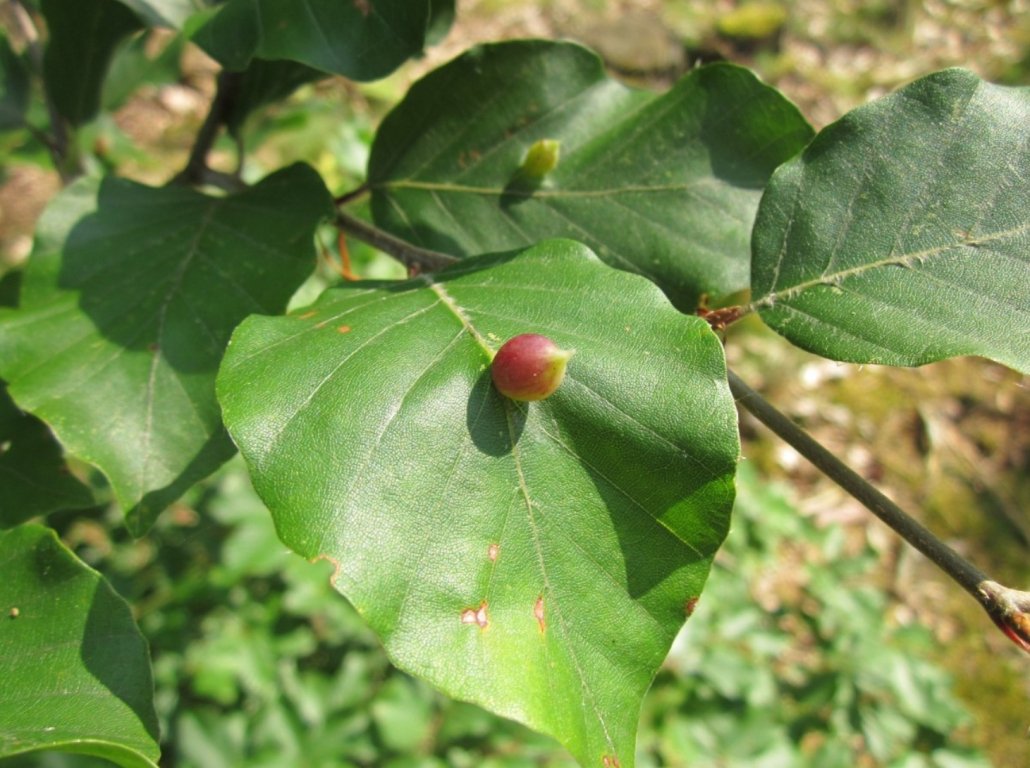 Some models make it possible to predict the impact of climate on the future distribution of plant species in a given area. Photo: CC0 Public Domain Free for personal and commercial use No attribution required
Despite incomplete data, some models can effectively predict the impact of climate on biodiversity and the spread of plant species in a natural area
by Matteo Cavallito
Climate change impacts on the development and spread of plant species. Determining how this happens and what concrete effects will occur, however, remains a complex task. In response to this problem, a group of researchers from the University of Córdoba in Spain tested the effectiveness of some large biodiversity databases compiled by citizens. These databases, the authors explain in a news release, could calibrate joint species distribution models, provided that more than 50 per cent of the species present in the area have been recorded. The results were published in the journal Ecography.
A new forecasting model
‘Anticipating the effects of global change on biodiversity has become a global challenge requiring new methods,’ the study explains. However, ‘Approaches like species distribution models have limitations. This is why researchers around the world are still trying to replace mathematical models that only take into account environmental variables (such as climate or soil type) with alternative systems that also take into account the relationships between plants. Techniques ‘based on the joint distribution of species (JSDMs)’ fall into this category.
However ‘JSDMs rely on systematic surveys community data, and no assessment has been made of their suitability with unstructured opportunistic databases data.’
To find out more, researchers Diego Nieto and Daniel Romera, from the Basic and Applied Plant Biology group at the same Spanish university, focused precisely on unstructured databases, i.e. those containing individual data from citizen observations. These collections, they explain, do not consider the relationships between species. But since they contain billions of individual pieces of information, they could still be used to calibrate models.
50% of the data is enough to make some accurate predictions
Starting with real databases, such as the Global Biodiversity Information Facility (GBIF), which contains more than three billion units of biodiversity data recorded through applications such as iNaturalist, the researchers created an artificial database to conduct the experiment by evaluating how well the model works. These informations ‘mimics the limitations of such databases by subsampling complete co-occurrence matrices (i.e. original data)’, the authors explain.
‘We analysed how the completeness of opportunistic databases affects JSDMs regarding 1) the role of independent variables on species occurrence, 2) residual species co-occurrence (as a proxy of biotic interactions) and 3) species distributions.’
Working with the generated data, the scientists ascertained the model’s response by checking its possible use with existing individual databases. After calibrating the model by simulating different levels of recording (number of species reported as a percentage of the total present in an area) they obtained an answer. Models with 50% missing data ‘are valid for estimating species niches and distribution, but interaction matrices require databases with at least 75% of completion data’ the study explains.
Climate and biodiversity, two interlinked crises
According to the researchers, the study opens the way to the possibility of calibrating models to make predictions on the effect of climate change on biodiversity. By monitoring, in this way, the effectiveness of current plans to protect different plant species. The positive or negative relationships between them will be decisive in predicting their future distribution.
There is a particularly strong link between climate and biodiversity. It is no coincidence, in this sense, that many observers have long since begun to take a particular approach to consider both problems together. Some, in particular, now define climate change and biodiversity loss as ‘twin crises’. Which, as things stand, impact on our own economic system, which is still heavily dependent on species diversity.
 Sam Beebe, CC BY 2.0
 Photo: Thomas Bjørkan CC BY-SA 3.0
 Re Soil Foundation