
Nanomaterials offer a solution for groundwater remediation
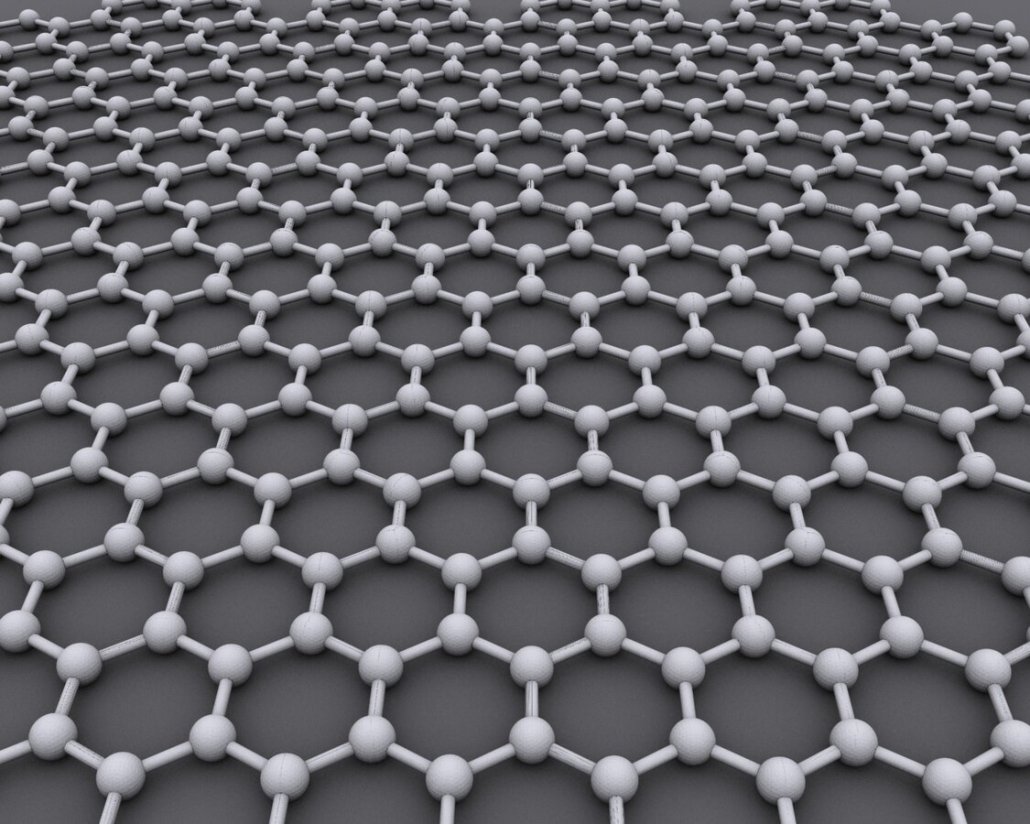 AlexanderAlUS Attribution - Share Alike 3.0 Unported CC BY-SA 3.0 Deed
 A group of Indian researchers used cellulose-coated nano-zerovalent iron particles to successfully clean up chromium-contaminated water
by Matteo Cavallito
Characterised by structures no more than 100 nanometres (one ten-thousandth of a millimetre) in length, nanomaterials have attracted particular attention in recent years. This is due to their many biological, mechanical, optical and electrical properties, which open the way to various applications. Among them, says a recent study published in the Journal of Water Process Engineering, is groundwater remediation.
The idea is supported by researchers at the Indian Institute of Science (IISc) who have developed a solution that can effectively reduce the presence of heavy metals such as chromium, a toxic element that typically infiltrates soil and groundwater through the effluents of industrial discharges.
A new remediation method
“The primary source of chromium pollution in water is industrial operations such as electroplating, leather tanning, and textile manufacture, which use chromium for its ability to resist corrosion,” the study explains. Hexavalent chromium remains the most harmful variant to health. Currently, most methods of heavy metal decontamination are based on taking water from the ground. Others include purification by chemical precipitation, adsorption, ion exchange and reverse osmosis at another location.
The researchers, anyway, tested a different solution that involves the use of iron nanoparticles capable of capturing precisely those metals. “If the groundwater is contaminated,” explains Prathima Basavaraju, researcher and co-author of the study in a statement released by the Indian Institute of Science,”we can inject these nanoparticles into the subsurface groundwater region where it will react with the chromium and immobilise it, resulting in clear water.”
Efficacy rises to 99%
The team synthesised nanoparticles consisting of nano-zero-valent iron (nZVI) and improved its stability by adding carboxymethylcellulose (CMC). Under these conditions, iron reacts with hexavalent chromium, reducing it to its trivalent form – which is less toxic – and results in co-precipitation. The research team also increased the reactivity of the product by exposing it to sulphur-containing compounds, resulting in the formation of a protective layer of iron sulphide on the surface.
The resulting product, the experiments report, “exhibited outstanding uniformity and corrosion resistance.” In detail, the study explains, “When the sulfur to iron molar ratio was increased from 0 to 0.4, Cr(VI) removal efficiency increased from 73.89% to 99%“. In sintesi, conclude la ricerca, “Experiments on polluted groundwater showed that synthesised nanoparticles may remove Cr(VI) over a long time.”
The prospects of nanomaterials
The results of the experiments therefore confirm the potential of nanomaterials in water and soil restoration. An idea that has now gained recognition. Last year, an article published in the trade journal AZoNano highlighted how nanotechnology applied to soil improvement practices offers an environmentally friendly alternative to traditional techniques.
According to Priyom Bose, a researcher at the University of Madras, India, and an expert in biotechnology, nanoparticles “can easily disperse into the pore space between the soil particles.” In particular into fine soil particles that are not under high pressure.” Common nanomaterials, moreover, “are inert and non-toxic, it does not harm the soil and groundwater aquifers.” Finally, they can also be effective when applied in small quantities.


 Quintin Soloviev, CC BY 4.0


